November 4, 2026
Jud Smith
TL;DR:
Winter gutter problems in Utah usually come down to clogs, ice dams, standing water, and loose sections. Snow weight and freeze-thaw cycles turn those small flaws into leaks and roof damage, so fix them in the fall.
The first heavy snow of the season shows you exactly where your gutters are weak. Water spills over a clogged run, and ice builds at the roof edge where it should be draining. Most of those failures are gutter problems before winter that nobody fixed in the fall.
In a national survey of U.S. adults heading into last winter, 66% had not cleaned their gutters. Those gutters went into the cold season holding leaves and dirt that freeze solid.
This guide walks through seven winter gutter problems Utah homeowners run into, from Salt Lake City to Provo. Most start small enough for a simple fall gutter repair. Left alone, they become winter roof problems by January.
In this post, you will learn:
- The seven gutter problems to check before the first hard freeze
- How ice dams and snow weight lead to leaks and winter roof damage
- Why downspout mistakes cause ice at the foundation and on walkways
- When a problem needs a professional instead of a ladder
Before the First Storm: Walk the roofline once in the fall and look for overflow stains and sagging runs. Spending 20 minutes on it now helps you prepare for winter and protect the roof.
1. Clogged Gutters Left Full of Fall Debris
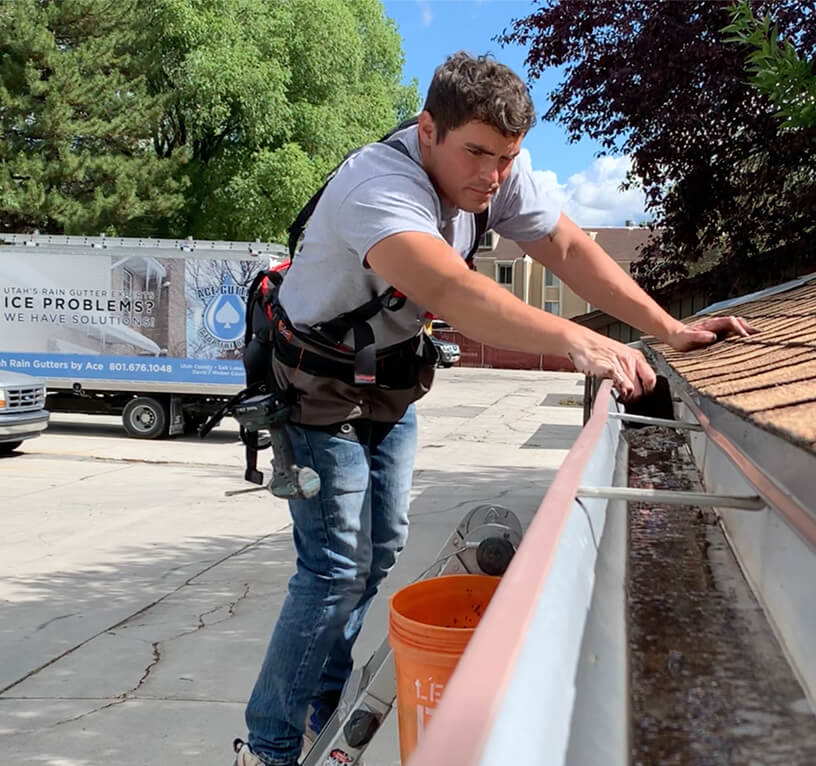
Clogged gutters are the most common winter gutter problem on a Utah roof. Leaves, pine needles, roof grit, and dirt pack into the channel until water has nowhere to go. Many homeowners clean in spring and skip the fall visit, the one that matters most.
In summer, a clogged gutter just overflows. In cold weather, the debris holds water until it freezes into a block of ice in the trough and downspouts. Melting snow backs up behind it at the roof edge, leading to ice dams.
Clean Before the First Hard Freeze
Clean gutters after the last leaves drop, late in the fall season. Waiting until the weather turns means scooping out frozen debris. Keeping gutters clear also means a quick check after windstorms, which refill a clean run with twigs and needles.
Signs To Watch For:
- Water spilling over the front edge during rain or snowmelt
- Plants or moss growing in the gutter
- Downspouts that drip slowly or stay dry
- Dark streaks on the fascia below one section
2. Ice Dams Forming Along the Roof Edge
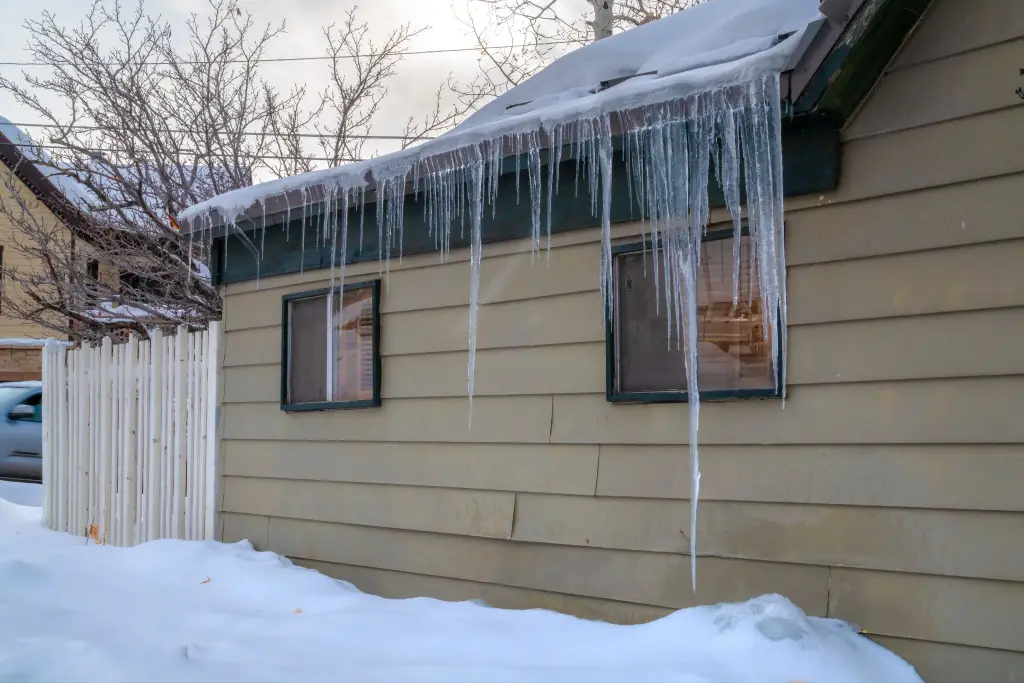
Ice dams start in the attic, where heat escapes through gaps in the ceiling and warms the roof deck. Snow melts from underneath and runs down to the cold eave, where it freezes again at the gutter.
Each cycle adds a layer, and ice dams build until the gutter is packed solid. Water trapped behind the ice works under shingles and shows up as leaks on the ceiling or walls. Most Utah homes with repeat ice dams have the same attic problem every year.
Where the Heat Escapes
Warm air leaks into the attic space through light fixtures, attic hatches, bath fans, and gaps around vent pipes. Thin insulation lets that heat reach the roof deck and melt snow across the entire roof. Air sealing and insulation fix the cause and make the house more energy efficient.
That warm air carries moisture, which condenses on the cold roof deck. Over winter, it can lead to mold in the attic, which affects indoor air quality in the rooms below. Damp insulation also stops working, which lets even more heat escape.
Heat Cable for Problem Spots
Heat cable along the roof edge and inside the gutter keeps a melting channel open through freezing weather. It keeps water moving on eaves that dam every year, even after the attic is sealed. Fall is the best time to install one, before the snow starts.
How It Works: Heat escapes into the attic and warms the roof deck. Melting snow refreezes at the cold eave, and the ice dam traps more water behind it each day.
3. Standing Water From a Poor Gutter Slope
Water left in gutters freezes the first night the temperature drops below freezing. Gutters need a slight slope toward each downspout, about ¼ inch for every 10 feet. When a run sits flat or tips the wrong way, water collects in the low spots.
That ice grows heavier with each winter storm and pulls on the hangers holding the gutters up. In spring, the same low spots hold water for days and rot the fascia. Fixing standing water in gutters usually comes down to resetting the hangers along the low section.
How to Check the Slope
On a dry day, run a hose into the far end of each gutter and watch where the water stops. Any section that holds water after you turn off the hose needs its slope reset. Clean the gutters first, since debris hides a bad pitch.
Quick Check: After a cold night, look for ice in the gutter while the rest of the roof edge is clear. Ice in one spot means water is sitting there, and that section needs a slope adjustment.
4. Sagging Gutters That Lead to Winter Roof Damage
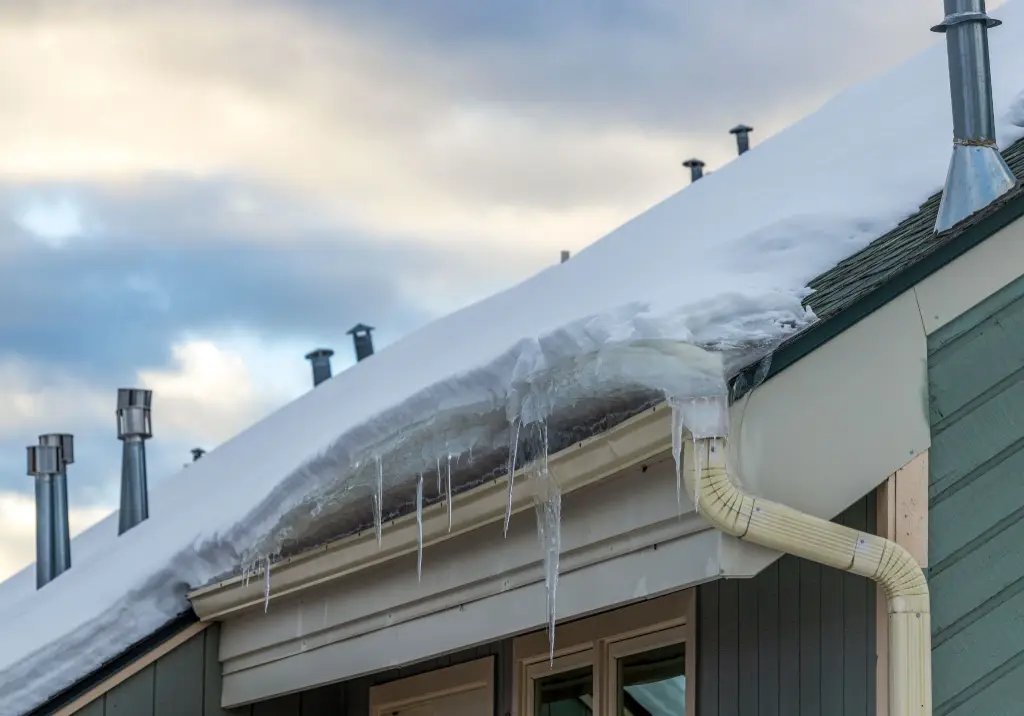
Snow sliding off the roof lands in the gutters, and packed snow and ice weigh far more than rain. Hangers set too far apart or into soft fascia pull loose under that load. One sagging section tips the entire system, and water pools at the low point.
That weight causes real losses. In the East, two winter storms early this year produced more than 46,000 claims for snow and ice damage or collapse. In Utah, the same pressure shows up as winter roof damage, where a falling gutter tears shingles and fascia from the roof edge.
Hanger Spacing and Secure Installation
A secure installation puts a hanger about every 2 feet in snow country and drives it through the fascia into solid framing. Older half-round and K-style runs often used spikes that loosen after a few heavy storms. Swapping spikes for hidden hangers costs little and holds through heavy snow.
Red Flag: A gutter that sags in the middle or gaps away from the fascia will not hold through a snowy Utah winter. Rehang that section while the weather is still dry.
5. Leaking Seams and Gaps at the Joints
Leaks at the seams get worse in cold weather as old sealant shrinks and cracks. Each cold night pushes ice into those gaps and pries the joint a little wider. Corners, end caps, downspout outlets, and long seams are where most leaks start.
Water dripping behind the gutter soaks the fascia and runs down the siding. Over a few seasons, that moisture leads to wood rot and mold, and the gutter loses its anchor. Small leaks cause more damage with each freezing night.
Resealing a Leaking Seam
A leaking seam needs the old sealant scraped out and the joint dried before applying new sealant. Do the repair on a dry fall day, since sealant will not cure in the cold. Seams that leak again after resealing usually need a new section.
Common Mistake: Caulking over a seam with ice still in it traps water inside the joint. The leak comes back with the first thaw, often worse than before.
6. Downspouts That Freeze or Dump Water at the Foundation
Downspouts freeze first when temperatures drop into extreme cold, since a narrow pipe fills with ice faster than an open gutter. A clogged elbow at the bottom backs water up the whole run until the gutters overflow. That water then runs down the house’s wall.
Where the downspout ends matters just as much. Water dumped at the foundation soaks the ground and freezes against the wall. Each thaw sends it into cracks that lead toward the basement and the home’s structure.
Each discharge point behaves differently in a Utah winter:
| Where the downspout ends | What happens in winter | The fix |
| At the foundation | Meltwater pools and refreezes, then seeps toward the basement | Add an extension that carries water 6 feet out |
| On the driveway in front of the garage | Water freezes into a sheet of ice across the garage doors and apron | Reroute the downspout or run it to a buried pipe |
| On a walkway near the front doors | Ice forms right where people step outside | Move the outlet away from entry doors and steps |
| 6 or more feet out, or into a buried pipe | Water drains away from the property before it freezes | Keep the outlet clear of snow and check the pipe each fall |
A short extension costs little and protects both the foundation and the garage floor from ice.
Step By Step: Flush each downspout with a hose in the fall and confirm water exits freely at the bottom. Then attach an extension that ends at least 6 feet from the house.

7. Overflow and Icicles Above Doors and the Garage
Gutters that overflow above doors and the garage drop water right where people walk. On sunny winter days, the sun warms the roof and melting snow spills over a blocked gutter. By evening, it refreezes into icicles over the entry doors.
Heavy icicles pull on the gutter and the shingles at the roof edge, marking where ice dams form. Water running down the wall also stains siding and seeps around windows. When temperatures swing daily, this cycle repeats all winter.
Why the Garage and Front Doors Get Hit First
A low garage roof sheds snow and meltwater right in front of the garage doors. Front doors often sit under a valley where two roof sections meet, which sends extra water to one short gutter. Both spots often need a wider gutter or a diverter.
Utah Gutter Winter Preparation Check: Icicles over doors are the easiest gutter problem to spot from the ground. Look up before you walk in, and mark any gutter that drips over a door or the garage.
When Gutter Issues Turn Into Winter Roof Problems
Caught in the fall, most winter gutter problems in Utah are simple fixes that can become expensive repairs by February. Once water gets past the gutter, it moves into the roof deck and the attic. From there, small gutter issues become winter roof problems.
A professional visit in the fall covers what a ladder check usually misses:
- Ice dam sources: A crew checks the eaves where ice dams formed last winter, along with the attic insulation and moisture above them. Heat cable goes on the spots that dam every year.
- Hidden leaks: Seams and outlets get tested with water, and leaks get resealed before freezing weather sets in.
- Hanger and slope repair: Loose hangers get replaced, and low sections get reset so the system drains in bad weather.
- Roof edge damage: Shingles and fascia behind the gutter get checked for rot to protect the roof before snow loads up.
Regular inspections and a fall clean cost far less than a winter of repairs. They help you prepare the roof and gutters for the weather ahead and save you the cost of spring water-damage repairs. Booking early also means a crew is available before demand jumps after the first storm.
Next Step: If ice dams formed on the same eave last winter, start there. A crew will check the shingles above it and where the melting snow drains before the next storm.
Get Your Gutters Ready Before the First Freeze
The seven winter gutter problems Utah homes face all start small and get worse with each freeze. A fall clean and a few repairs prepare the gutters before snow arrives. Regular upkeep year-round keeps those fixes working.
Since 1998, our team at Ace Gutter has helped Utah homeowners and business owners protect their property from snow and ice damage. Our crews know how a Utah winter tests every part of a gutter system.
Request a quote from us today. We will inspect your gutters and downspouts and tell you what to fix before the weather turns. Catching problems now helps you prepare and save on spring repairs.
Frequently Asked Questions About Winter Gutter Problems in Utah
What Are the Most Common Winter Gutter Problems Utah Homes Face?
Clogged gutters and ice dams lead the list, followed by sagging sections and leaking seams. Most start with debris left in the gutter after fall. A clean before the first freeze prevents many of them.
Do Homes in Salt Lake City Need Bigger Gutters for Winter?
Not always. A standard 5-inch gutter handles most homes, while a large or steep roof often needs a 6-inch gutter and bigger downspouts. Roof size and pitch matter more than location.
How Do I Prevent Snow and Ice Gutter Damage?
Keep the gutters clear and the hangers tight. Sealing attic air leaks reduces the meltwater that refreezes at the eave. Downspout extensions keep water from freezing at the foundation.
Are Heat Cables Worth It on Utah Gutters?
They are worth it on eaves that dam up every year. The cable keeps a channel open through freezing temperatures, much like heat tape on exposed pipes. They work best alongside good attic insulation.
Should I Clear Snow Off the Roof Edge?
A roof rake used from the ground safely removes the bottom few feet of snow. That cuts the meltwater feeding ice dams. Avoid climbing onto an icy roof, and leave heavy loads to a professional.

Need Help? Get a free assessment
Get a call back within 1 hour
(During business hours).
Recent Posts

Share
Recent Posts
How Freeze-Thaw Cycles Can Damage Utah Gutter Systems
November 10, 2026
TL;DR: when this happens, water melts by day and refreezes at night, expanding inside seams and downspouts until something gives. Keeping gutters clear...
Heavy Snow and Ice Are Coming: 7 Gutter Problems to Fix Before Utah Winter
November 4, 2026
TL;DR: Winter gutter problems in Utah usually come down to clogs, ice dams, standing water, and loose sections. Snow weight and freeze-thaw cycles...
What Gutter Size Is Best for Handling Heavy Rain?
October 28, 2026
TL;DR: For most homes that see frequent storms, a 6-inch gutter system paired with larger downspouts is best for heavy rain. Roof size,...