October 26, 2026
Jud Smith
TL;DR:
Yes. Heavy snow gutter damage happens when packed snow and ice add more weight than the hangers were built to carry, pulling the gutter and fascia away from the roofline. Sliding snow and ice dams at the roof edge add to that load.
One heavy winter storm is all it takes to bend a gutter that hung straight for years. By the time the snow melts, one section has pulled away from the roofline. Most homeowners don’t notice until a water stain shows up inside.
Utah snow comes in bursts, and a single week can load a roof. In early January, Snowbird picked up 53 inches in under a week, with Alta close behind at 50. Valley storms are smaller, but heavy snowfall still packs into gutters faster than most people clear it.
That makes heavy snow gutter damage a real risk, especially where hangers are already loose. Snow weight and ice dams both pull the gutter down and away from the fascia. This guide covers how it happens and when a gutter repair makes sense.
In this post, you will learn:
- How snow weight and sliding snow pull gutters off the fascia
- The signs of sagging gutters after a storm
- How to prevent ice dams before the next big storm
- How long gutter guards last under snow and ice
Short Answer: Snow alone rarely rips a solid gutter off sound fascia. Loose hangers and ice packed inside the trough are what let it pull away.
How Heavy Snow Gutter Damage Happens
Utah snow tends to arrive in bursts. Park City Mountain picked up 32 inches in one February storm. Snow that piles up that fast lands on the roof and in the gutters before anyone can clear it.
Wet snow and rain turn that load into ice in the gutters. Over a few freezing nights, the ice keeps building, and the fascia and roof edge face a real risk of structural damage.
Added Weight on Hangers and Fascia
Each hanger carries its share of the gutter plus whatever sits in it. Added weight from packed snow and ice typically pulls the weakest hanger first, often one screwed into soft fascia. Once it lets go, the weight shifts to the hangers beside it, and a whole section of the gutters starts to sag.
Snow Sliding Off the Roof Edge
A heavy layer of snow on the roof eventually lets go and slides toward the eaves. On a metal roof, it slides off faster and in larger sheets, and the gutters take the hit as it passes over.
Steep metal roofs are most prone to this, and a sliding sheet of snow can rip a loose gutter straight to the ground. That’s why gutters built for metal roofs use stronger mounting.
How It Happens: Melted snow from the roof refreezes in the gutters, adding weight every cold night until a hanger gives out.
Signs of Sagging Gutters
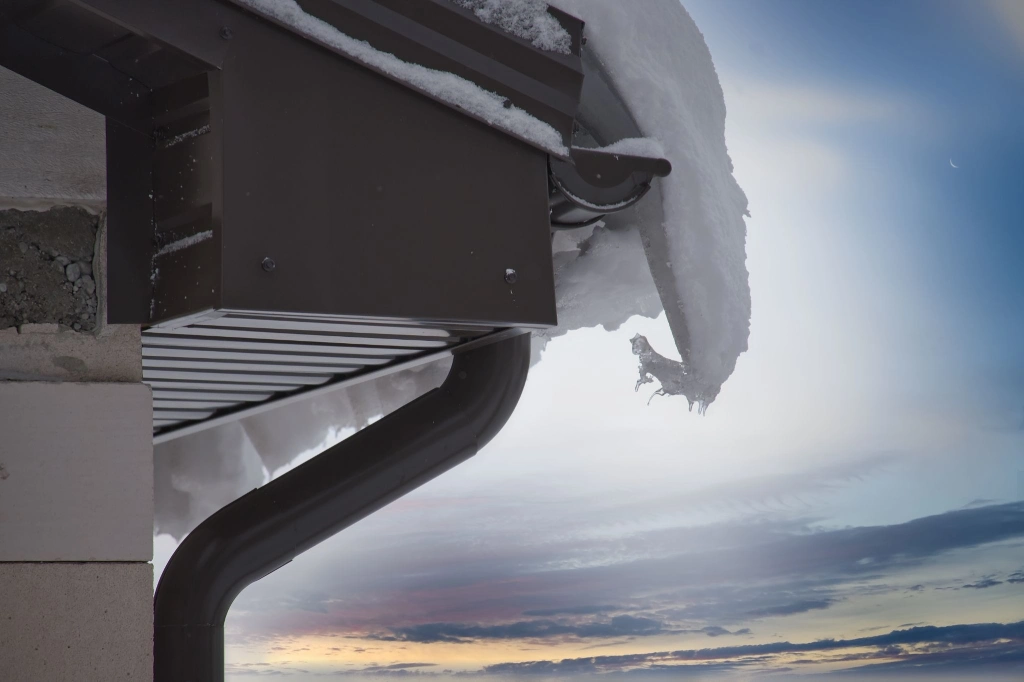
Sagging gutters are the clearest sign that winter weight has done damage. Look for gutters separating from the roofline at the corners or a dip in the middle of a long run.
Loose gutters after heavy snow often look fine from the ground until the next thaw. Then water spills behind them and runs down the siding and walls instead of reaching the downspouts.
What each winter sign usually means:
| Sign | What it usually means | What to do |
| Ice buildup along one section | Water is pooling and freezing at a low spot | Reset the slope once the ice melts |
| Icicles hanging behind the gutter | Water is running between the gutters and fascia | Check the hangers and the fascia wood |
| Gaps at the corners | Seams pulled apart under snow weight | Reseal or replace the seams |
| Stains or cracks on the siding | Overflow is running down the walls | Clear the debris and check the downspouts |
| Wet spots near the foundation | Water is dumping at the base of the house | Extend the downspouts and check the flow |
One sign after a winter storm is worth a closer look. Two or more usually means the hangers or fascia need repair before water damage spreads.
Signs to Watch For: Gutters that tilt, gaps at the corners, icicles forming behind the gutter, and leaks that show up on the walls days after a storm.
How Ice Dams Add to the Load
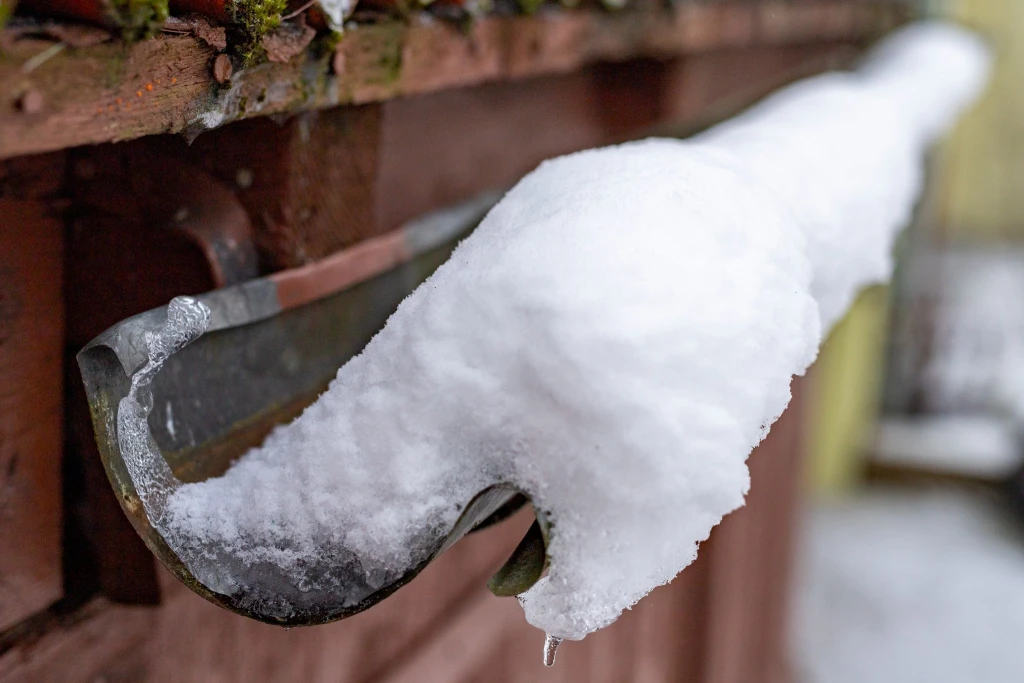
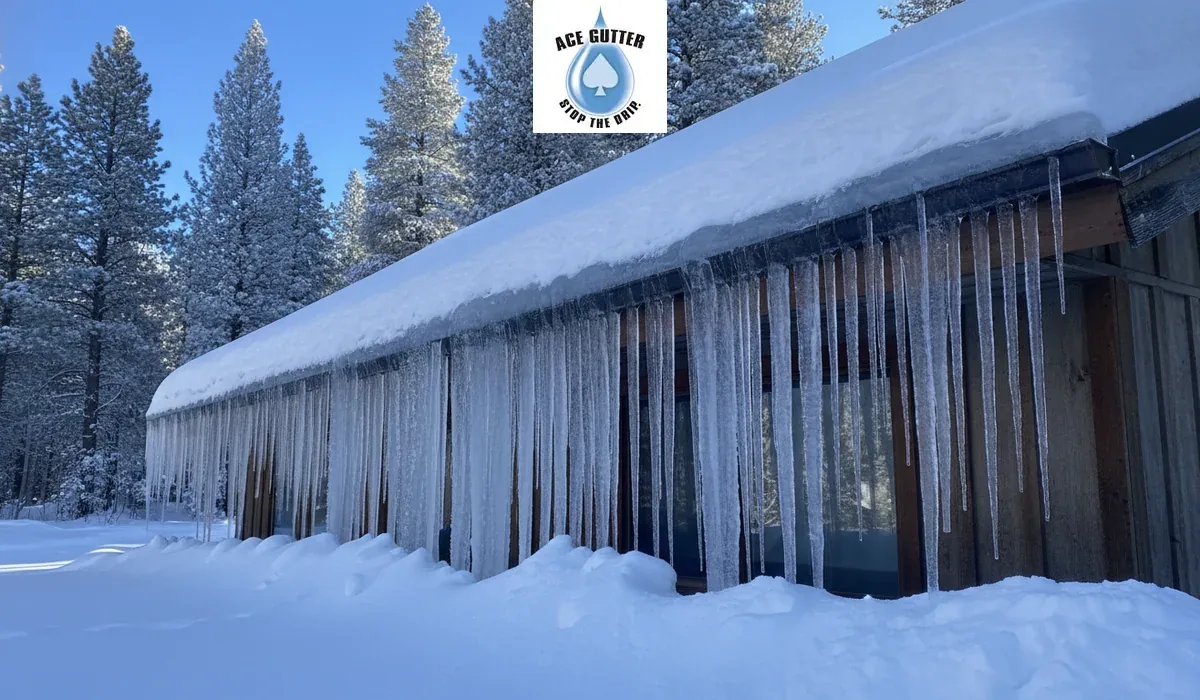
Ice dams form along the eaves, right above the gutters, and add a heavy ridge of ice to a system already full of snow. Ice dams also trap meltwater behind them, and freezing nights turn it into another layer of ice.
That water has to go somewhere. It backs up beneath the shingles and seeps into the ceilings, leading to mold and water damage. Homes with ice dams every winter often have the same leak in the same spot.
Ice Dam Formation and Attic Insulation
Ice dam formation starts with heat. Poor insulation lets warm air rise into the attic and melt snow on the roof from underneath, so the roof deck runs warmer than the eaves. That meltwater freezes again where it reaches the cold line at the edge.
Attic insulation and air sealing keep the roof closer to outdoor temperatures, so less snow melts in the first place. A well-insulated attic is the most reliable way to prevent ice dams from forming.
Why It Happens: When ice dams form along the same stretch of roof every year, heat loss in the attic above that spot is the likely cause. The gutters only show where the problem ends up.
How to Prevent Ice Dams and Snow Damage
To prevent ice dams, keep heat out of the attic and keep the gutters draining. Clear the debris before winter so melted snow has an open path through the gutters to the downspouts.
After a big storm, a roof rake used from the ground pulls the bottom few feet of snow off the edge. That simple step helps protect gutters from ice by cutting off the meltwater that feeds it.
Snow Guards and De-Icing Cables
Snow guards are small brackets on the roof that hold snow in place, so it melts slowly and doesn’t slide off in one sheet. They help prevent snow from tearing gutters off steep metal roofs.
De-icing cables run along the eaves and inside the gutters to keep a channel open through freezing temperatures. Professionally installed ice melt systems protect trouble spots where ice forms every winter.
Gutter Guards and Covers in Winter
Gutter covers keep leaves and debris out, which leaves less to freeze in place. In heavy snow, though, snow can pack on top of a cover and add its own weight, and melted snow can still fill the trough below if the downspouts freeze.
Before The Snow Flies: Clear the gutters and test each downspout with a hose before the first storm. Make sure every hanger is tight, since loose ones are the first to fail under ice.

When Loose Gutters Need Professional Repair
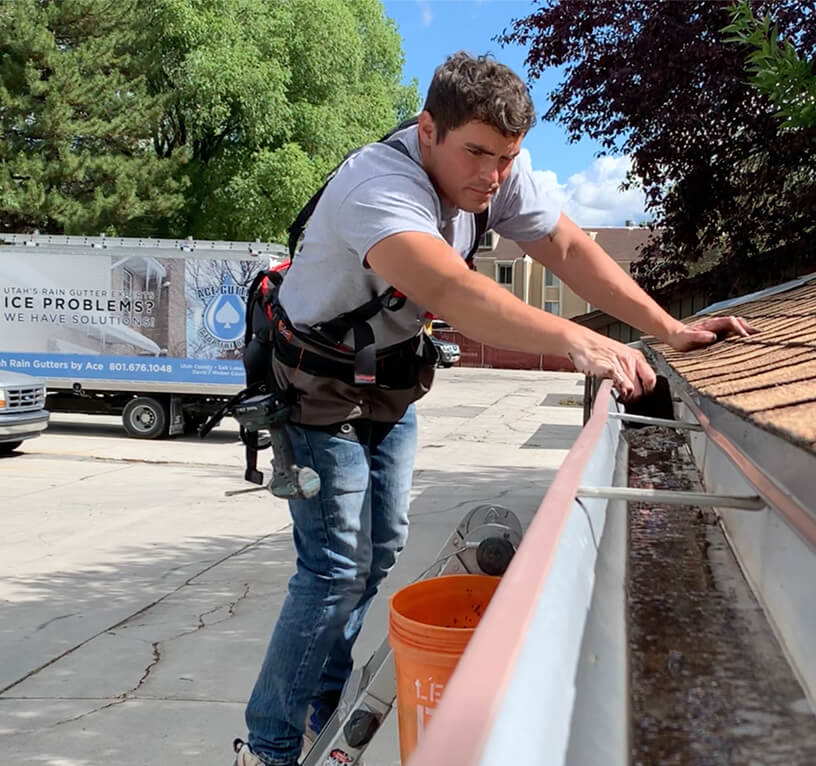
Some heavy snow gutter damage is a quick fix, like one loose hanger on a short run. Bigger problems need a crew with the right ladders and safety gear, especially when ice is still in the gutters, or the fascia behind them has gone soft.
Call for repair when you see any of these:
- A section pulling away from the fascia: That gap lets water and ice into the wall, and it widens with every storm.
- Leaks behind the gutters: Stains on the soffit or siding mean the gutters are dumping water behind the fascia instead of carrying it to the downspouts.
- Ice dams every winter in the same place: Rehanging the gutter treats the damage, and fixing the heat loss above it helps prevent ice dams from coming back.
- Rotted or split fascia: New hangers won’t hold in soft wood, so you need to replace the board before reinstalling the gutter.
Fall is the best time to get ahead of it, before the first snow. A repair in early spring also helps protect the house before next winter, since solid hangers and sound fascia are the best protection against another season of ice.
Next Step: After a storm, take photos of any sagging section from the ground. They help a crew see whether the problem is the hangers or the fascia.
Get Your Gutters Ready for a Real Winter
Heavy snow gutter damage usually starts with a hanger that was already loose before winter. Tightening hangers and fixing soft fascia now will protect your home when ice and heavy snow return.
Our team at Ace Gutter repairs and rehangs gutters across Utah, from Layton to Provo. We know how snow and ice load gutters during a Utah season.
Request a quote from us today. A crew will check every hanger and stretch of fascia and tell you what needs work before the snow returns. Fixing it now helps protect your roof and gutters from ice all winter.
Frequently Asked Questions About Heavy Snow Gutter Damage
Is Snow Causing Gutters to Pull Away a Sign of Bad Installation?
Not always. Even well-hung gutters fail when ice fills them for weeks, though wide hanger spacing and short screws make it far more likely. If the same section pulls loose every year, it usually points back to how the hangers were installed.
Should I Knock Icicles Off My Gutters?
Small icicles near the ground are fine to knock down with a broom. Large ones on a sagging gutter can break off with the gutter, so leave those to a crew with safety gear. Icicles that form every winter usually mean ice dams sit above them.
Will Heavy Snow Damage My Home’s Foundation?
Indirectly, yes. Melted snow and rain that spill over sagging gutters pool against the house and work into foundation cracks. Freezing nights widen those cracks over time.
Do Metal Roofs Need Extra Protection?
Most do in Utah, since snow slides off metal in large sheets that hit the gutters hard. Brackets that hold the snow in place, plus stronger gutter mounting, both help. Ice packed in the gutters makes a sliding sheet even more likely to tear them loose.
How Can I Tell If Ice Is Causing Leaks?
Look for leaks that show up during a thaw, especially on ceilings near outside walls. If water appears while ice still covers the eaves, an ice dam is the likely source. Fixing the attic heat loss and installing de-icing cable on that stretch usually stops it.

Need Help? Get a free assessment
Get a call back within 1 hour
(During business hours).
Recent Posts
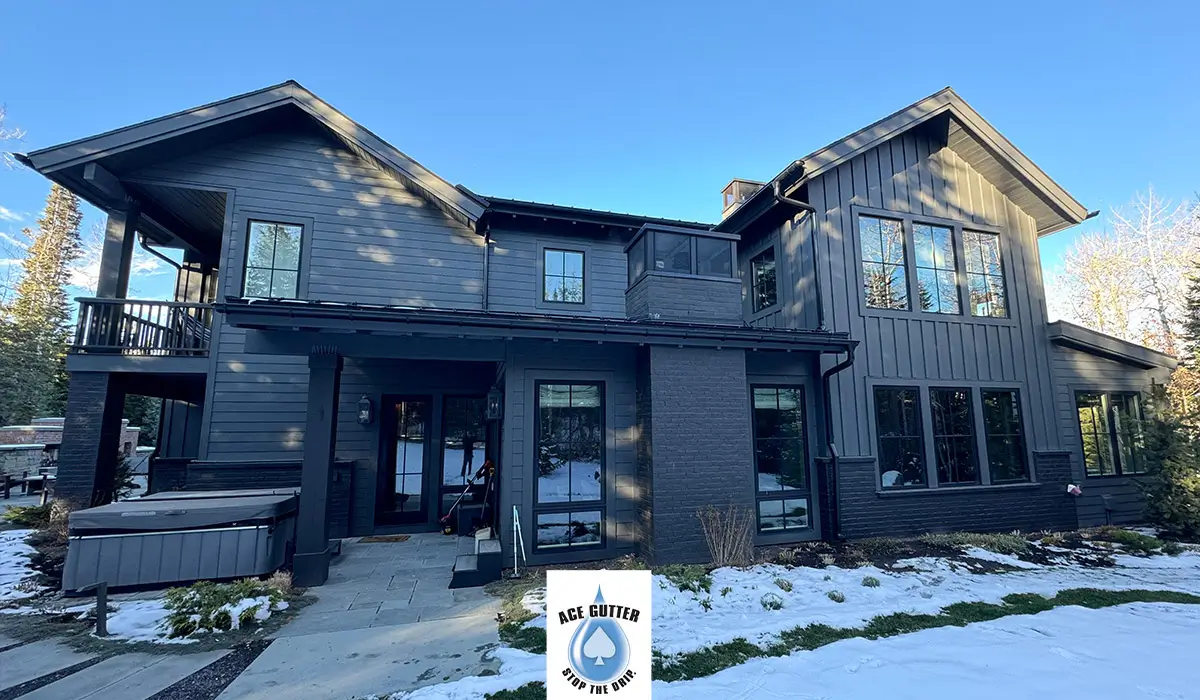

Share
Recent Posts
Can Heavy Snow Cause Gutters to Pull Away From Your Roofline?
October 26, 2026
TL;DR: Yes. Heavy snow gutter damage happens when packed snow and ice add more weight than the hangers were built to carry, pulling...

Roof Heating Cable Installation and Running Costs
October 22, 2026
TL;DR: Roof heating cable installation cost depends on how many feet of cable your roof edges and gutters need, plus the electrical work...

Is Your Gutter System Ready for an El Niño Winter in Utah?
October 14, 2026
TL;DR: A very strong El Niño is forecast for the 2026-27 Utah winter, bringing warmer temperatures and more freeze-thaw cycles, not guaranteed snow....