July 3, 2026
Jud Smith
TL;DR:
Copper gutters offer long lifespan, strong weather resistance, and a premium finish that develops a natural patina. Though installation costs are higher, they suit long-term homeowners seeking durability, low upkeep, and architectural appeal across classic and luxury homes.
Did you know that Americans are estimated to spend $522 billion on home remodeling projects in 2026? That shows a continued focus on improving and preserving residential properties.
As homeowners invest in exterior upgrades that add lasting value and curb appeal, premium building materials are attracting greater interest. Copper gutters are one example, offering a distinctive look, exceptional durability, and a lifespan that can outlast many traditional gutter systems.
Copper gutters have long been associated with high-end homes, historic properties, and custom builds. While they cost more than standard gutter materials, many homeowners see them as a long-term investment that combines performance, durability, and visual appeal.
In this blog, you’ll learn everything about copper gutter installation, including available options, costs, maintenance needs, and the installation process before making a decision.
Why Copper Gutters Are Worth Considering for Your Home
Copper gutters are often chosen for their long-term performance and distinct visual character. Beyond just handling rainwater, they add a refined look that evolves with time and suits a wide range of home styles.
The appeal of copper as a premium gutter material
Copper stands apart from many common gutter materials, including aluminum, vinyl gutters, and galvanized steel. Unlike painted surfaces that can fade or peel, copper develops a distinctive finish as it ages.
It is also highly resistant to corrosion. This makes it one of the most durable gutter materials available. Many homeowners choose copper because it combines longevity, beauty, and minimal maintenance.
Homes and architectural styles that benefit most
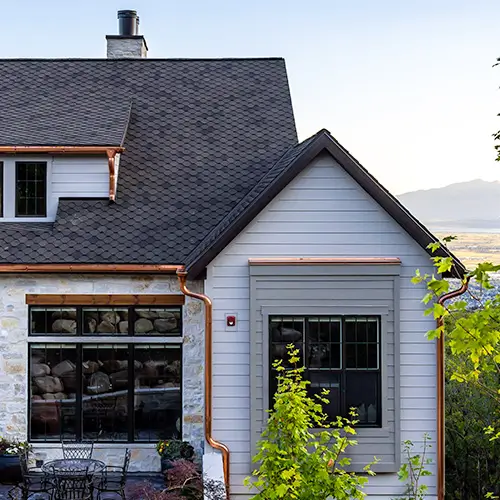
Copper gutters complement Colonial, Tudor, Victorian, Craftsman, and luxury custom homes. They are also popular for historic renovations where preserving architectural character matters. In many cases, copper gutters increase home appeal and support long-term home value, making them attractive for homeowners planning lasting exterior improvements.
In Short: If you are upgrading exterior features for both durability and curb appeal, copper gutters often become a one-time installation decision.
Types of Copper Gutters and How They Are Made
Homeowners typically start by comparing different copper gutter types based on material, profile, and construction method. Here are some of the types of copper gutters and their composition:
Pure copper vs. copper-coated alternatives
When evaluating copper gutter types, it is important to distinguish between solid copper and copper-coated products.
Pure copper gutters are manufactured entirely from copper and typically last much longer. On the other hand, copper-coated products use a different metal core with a copper finish, offering a similar appearance at a lower upfront cost but with reduced lifespan.
Half-round, K-style, and European profiles
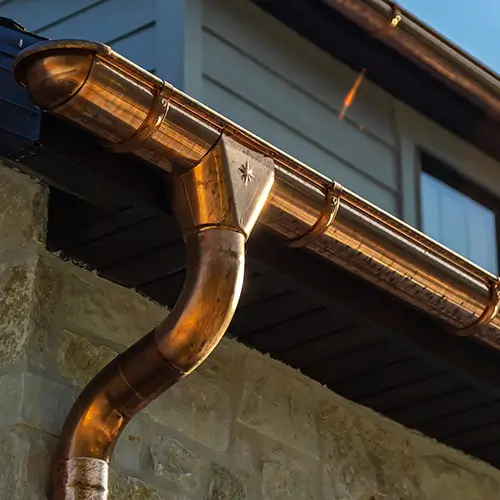
Among the most popular options are half round copper gutters, k style copper gutters, and European-style half-round copper gutters.
- Half-round gutters feature a smooth interior that promotes efficient drainage and complements traditional architecture.
- K-style gutters provide increased water-handling capacity, making them a practical option for many homes.
- European-style half-round copper gutters are selected for luxury properties and custom residences for a more refined look.
Seamless vs. sectional construction
Seamless copper gutter installation is a top priority for most homeowners. The reason: it reduces the number of joints where leaks may develop.
Sectional copper gutters are built from multiple connected pieces. They naturally have more seams, but they can still work well when installed properly. On the other hand, seamless gutters are custom-made for the home. This allows for a smoother finish and usually means fewer points that need attention.
Key Takeaway: Overall, copper gutter performance is shaped by material purity, profile selection, and construction style, with seamless solid copper systems typically offering the best balance of durability, efficiency, and long-term reliability.
Key Benefits of Choosing Copper Over Other Gutter Materials
Different gutter materials behave differently, both in appearance and performance. Copper follows a distinct path as it weathers and interacts with the environment. This sets it apart from more conventional options.
The points below break down what that looks like in practice.
Lifespan of 80 to 100 years with minimal upkeep
One of copper’s strongest advantages is longevity. With proper installation and low upkeep, copper gutters can remain functional for 80 to 100 years. This lifespan exceeds many aluminum gutters, steel gutters, and other residential gutter systems.
Natural patina, antimicrobial properties, and curb appeal
With time, shiny copper gradually darkens and eventually develops the characteristic blue-green patina that aged copper is known for. Homeowners consider this natural process one of copper’s most attractive features.
Moreover, copper carries antimicrobial properties that can prevent biological growth (mold, moss, mildew) on the material’s surface.
How copper compares to aluminum and steel
Compared to aluminum, steel, or zinc gutters, copper stands out for its blend of strength and visual appeal.
While other materials may come with a lower upfront cost, copper delivers stronger long-term value. All thanks to its longer lifespan and reduced need for repairs or replacement.
Expert Perspective: Roofing contractors often note that copper systems remain more stable at joints and seams over time compared to aluminum systems, which are more prone to fatigue and seal failure.
The Real Cost of Copper Gutter Installation
While copper gutters require a substantial initial investment due to the premium material and specialized artisan labor like precision soldering, they function as a permanent, lifetime upgrade for a home.
The true value is realized over time, as their natural durability eliminates regular replacement cycles and rewards you with a classic, zero-maintenance patina that lasts for nearly a century.
Material and labor pricing per linear foot
The copper gutter installation cost is significantly higher than standard aluminum systems. Per various data sources, current national averages show that copper gutters cost substantially more per linear foot installed, with pricing affected by labor requirements, fabrication complexity, and accessibility.
Here’s a table that highlights the average cost per linear foot of copper when compared with other materials:
| Material | Cost per Linear Foot (Installed) |
| Copper | $18–$73.80 |
| Aluminium | $8.80–$27.90 (avg: $18.35) |
| Vinyl | $3–$6 |
| Zinc | $10–$22 (avg: $16) |
Note: The average cost copper gutter installation mentioned above comes from widely used contractor estimates and U.S. home improvement cost benchmarks. They reflect typical installed ranges, since final pricing varies by location, labor rates, and project scope.
Hidden costs and long-term return on investment
Some of the additional expenses may include decorative copper downspouts, custom hangers, soldering work, and copper gutter guards. Homeowners replacing old gutters should also factor in removal costs.
Although the initial investment is higher, the reduced need for replacement can help homeowners save money over the long term. In the long run, the cost of replacing copper gutters often works out lower than repeatedly repairing or replacing shorter-lived materials.
What This Means For You: Although copper requires a higher upfront investment, its durability and low replacement needs often make it a more practical long-term choice for homeowners focused on lifecycle value.
The Copper Gutter Installation Process
Copper gutter installation follows a clear, step-by-step workflow, moving from planning and fabrication to precise on-site fitting.
1. Site evaluation and roof measurement
The process begins with a detailed review of the roofline. Installers measure slopes, edges, and drainage paths to understand how water moves across the structure. These measurements help determine gutter length, placement points, and downspout positions.
2. Fabrication of copper components
Once measurements are finalized, copper sections are shaped to match the home’s layout. This includes forming straight runs, corners, outlet openings, and end caps. Because copper is often custom-fabricated, each piece is prepared to align with the specific roof design.
3. Preparing support and hanger systems
Before installation begins, the support system is set up to handle copper’s weight. Heavy-duty hangers are spaced according to load requirements and roof structure. This step ensures the gutter system remains stable once fully installed.
4. Joining and sealing sections
Unlike standard gutter systems that often rely on snap-fit or sealants alone, copper gutters use soldered joints. These joints are carefully sealed to create continuous, watertight connections across all sections.
5. Alignment and final installation
Gutters are then positioned along the roofline, following the slope needed for proper drainage. Installers secure each section, check alignment, and make final adjustments to ensure consistent flow toward downspouts.
How It Works: Copper gutter installation involves precise measurement, custom shaping, and soldered assembly to create a continuous drainage system designed for long-term performance.
Copper Gutter Installation: Questions to Ask Before Hiring a Contractor
Choosing a contractor for copper gutter installation often comes down to more than basic pricing or availability. Since the material and installation method differ from standard systems, the right questions help reveal how experienced a contractor really is with this type of work.
Copper gauge, fabrication methods, and seam handling
Not all copper gutters offer the same level of quality. It helps to ask contractors what gauge copper they use, whether fabrication is done on-site or off-site, and how seams are joined and sealed. These factors can have a direct impact on durability and overall performance.
Warranty coverage and proof of copper experience
Copper installation requires a different skill set than the standard method of installing gutters. You can ask for examples of completed projects, warranty details, and proof of experience working with soldered copper systems. A qualified contractor should be able to demonstrate a history of successful professional installation projects immediately.
Before You Decide: It is important to choose a contractor with specific experience in copper systems, as installation quality directly affects durability and performance over time.
Common Copper Gutter Installation Mistakes Homeowners Should Avoid
Small installation decisions can shape how well copper gutters hold up over the years. Here are some of common mistakes homeowners should avoid:
- Choosing thin gauge copper to cut costs: Selecting thinner copper may reduce initial expenses, but it can also increase the likelihood of dents and more maintenance later.
- Mixing copper with incompatible metals like aluminum: Copper should not come into direct contact with aluminum or any other metals as galvanic corrosion can occur.
- Hiring contractors without specialized copper skills: Improper installation can create leaks, drainage problems, and premature wear. An improper copper gutter installation process can reduce performance, shorten lifespan, and increase long-term maintenance needs.
Watch Out: Poor material selection or improper installation techniques can lead to premature wear, leaks, and reduced system effectiveness.
How to Maintain Copper Gutters for Decades of Performance
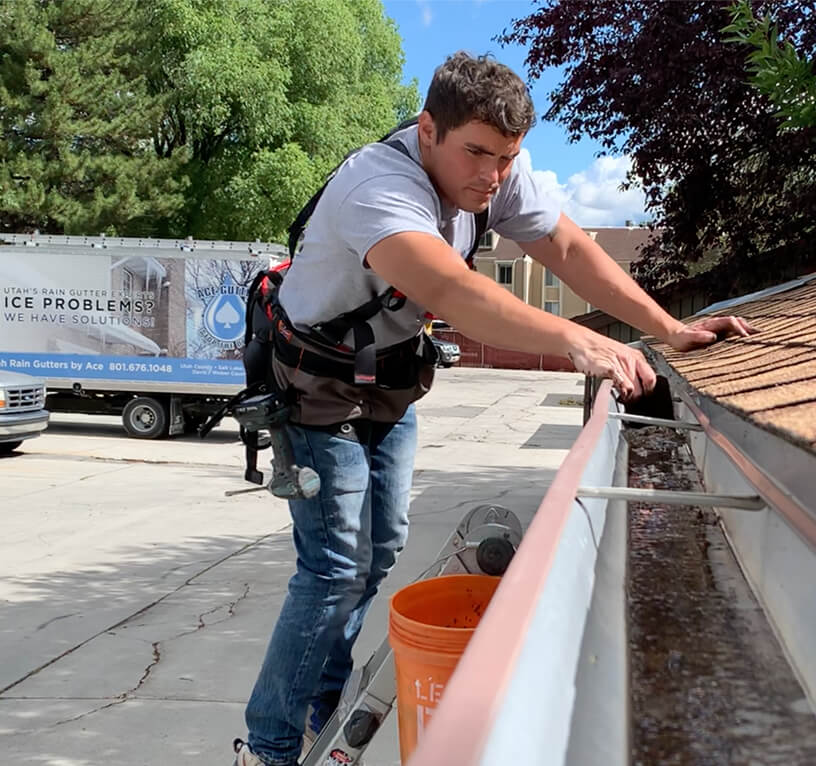
Copper gutter maintenance doesn’t take much effort, but a steady routine helps keep the system performing well over time.
Homes surrounded by many trees usually need more regular maintenance. It is because leaves and small debris tend to collect faster in the gutters. Some homeowners also choose to let the natural patina develop, while others prefer light care, keeping the original finish intact.
Along with routine cleaning, simple yearly checks can help identify small issues early. Loose hangers, minor dents, or slow drainage are easier to address when noticed in time. To add that extra protective layer, you can install copper gutter guards. These can also reduce buildup and cut down how often cleaning is needed, especially in areas with heavy tree cover.
Tip: Routine inspection and occasional cleaning are usually sufficient to keep copper gutters functioning properly in most residential settings.
How Climate and Weather Affect Copper Gutter Performance
Copper gutters usually tend to perform well across a wide range of weather conditions. This is one of the reasons they are often preferred for long-term installations. Copper holds up better than any other gutter materials in areas with heavy rain, coastal salt air, and heavy snow. Thanks to its strength and resistance to corrosion.
That said, installation quality still plays a key role in long-term performance.
Homes with steep roofs or areas that experience heavy snow loads require well-designed support systems to manage increased water flow and added weight. If installed properly, copper gutters can hold their shape and function, under demanding weather conditions.
What To Expect: In areas with harsh seasonal shifts, copper gutters typically maintain shape and function well, provided expansion, fastening, and drainage are correctly planned during installation.
Frequently Asked Questions About Copper Gutter Installation
Will copper gutters turn green over time?
Yes. Copper naturally develops a patina as it reacts with environmental conditions. Many homeowners consider this color change a favourable characteristic.
Are copper gutters worth the higher upfront cost?
Yes, for many homeowners who plan to stay in their home long term, copper gutters can justify the higher upfront cost. Their long lifespan, strong durability, and distinctive appearance, reduce the need for frequent replacements. This adds value over time.
Can damaged copper gutters be repaired?
In many cases, yes. Experienced copper specialists can repair damaged sections, resolder joints, and restore functionality without replacing the entire system.
Can copper gutters be painted or coated?
Copper gutters are typically left unfinished so they can develop their natural patina. Painting or coating them can interfere with this process and may not adhere well long-term. Most homeowners choose to keep the natural surface instead of altering it.
How long does copper gutter installation usually take?
Installation time depends on home size and roof layout, but most residential projects are completed within a few days. Custom fabrication or complex rooflines can extend the timeline slightly.
Do copper gutters increase home resale value?
They can improve buyer interest in certain markets, especially for historic or high-end homes. Their premium look and long lifespan often add to perceived exterior quality.
Are copper gutters noisy during rain?
No. When properly installed with secure hangers and correct slope, copper gutters handle water flow quietly, similar to other metal gutter systems.
Making the Right Call for Copper Gutters Installation
Copper gutters bring together durability, performance, and a distinct architectural finish that develops character over time. While the upfront cost is higher than other materials, many homeowners see value in the longer lifespan, reduced need for replacement, and strong resistance to weather exposure.
From material choice and installation methods to routine upkeep, each step influences how the system performs over the years.
For guidance on planning or installing copper gutters or for your next project, feel free to contact us at Ace Gutter. With over 20 years of experience, our team brings practical expertise across a wide range of residential gutter systems and other exterior requirements.

Need Help? Get a free assessment
Get a call back within 1 hour
(During business hours).
Recent Posts
How to Improve Drainage and Water Flow in Aging Gutter Systems?

6 Factors That Can Shorten the Lifespan of Your Gutters

What to Know Before Installing Leaf Guards on Your Existing Gutter System?

How to Fix Standing Water in Gutters and Prevent Future Damage

What Type of Gutter System Works Best With a Metal Roof?
Share
Recent Posts
How to Improve Drainage and Water Flow in Aging Gutter Systems?
October 2, 2026
If you are seeing puddles around your foundation, streaks along the siding, or soggy spots in the yard, your gutters may be struggling...
6 Factors That Can Shorten the Lifespan of Your Gutters
September 24, 2026
TL;DR: Weather, clogs, poor maintenance, installation issues, material quality and physical damage can shorten gutter lifespan. Regular upkeep and timely repairs can help...
What to Know Before Installing Leaf Guards on Your Existing Gutter System?
September 16, 2026
TL;DR: Leaf guards can usually be installed on existing gutters if the system is secure, properly sloped, and draining correctly. The right guard...