July 15, 2026
Jud Smith
TL;DR:
Steep rooflines send rainwater and snowmelt toward the roof edge faster, so they often need wider gutters, stronger supports, and enough downspouts to prevent overflow. K-style gutters work well for many homes, while box and half-round systems may suit specific roof designs.
A spring storm rolls through the neighborhood. In one home, rain flows neatly through the gutters. On another with a steep roofline, water rushes off the roof, spills over the gutter edge, and runs down the siding. The difference often comes down to choosing the right gutter style and size for the roof.
Steep roofs shed rain and snowmelt much faster than low-slope roofs, placing greater demand on the gutter system. If the gutters, downspouts, or installation are undersized, water can overflow, damage the fascia and siding, or collect around the foundation.
Utah’s spring snowmelt and intense summer storms make proper gutter selection especially important. The National Weather Service notes that monsoon thunderstorms can bring heavy rainfall and flash flooding to parts of Utah, highlighting how quickly large amounts of water may need to be directed away from a home.
This guide explains which gutter styles perform best and what to consider before choosing one.
Quick Answer: Six-inch K-style gutters are often a practical choice for steep roofs because they provide added capacity and mount securely against the fascia. Final sizing should also account for roof area, valleys, upper rooflines, and downspout placement.
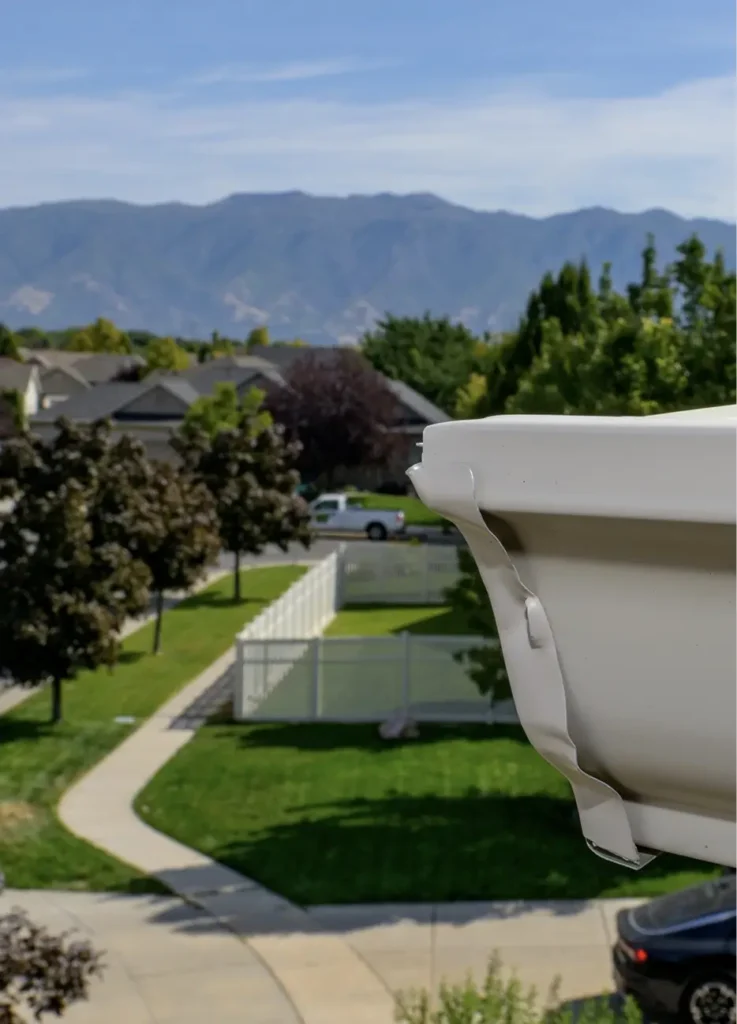
Why Steep Rooflines Demand Different Gutter Solutions
Roof pitch is the roof’s rise over its run. A roof that rises 8 inches for every 12 inches of run has a steeper angle than a 4:12 roof. As pitch increases, water gains speed before it reaches the gutter. That faster flow can overwhelm a standard residential gutter, even during a short storm.
This is why gutter styles for high-pitch roofs need to be judged by water volume, not appearance alone. Low slope roofs release water at a slower rate, so smaller gutters may perform well there. Steep roofs send runoff into the gutter in a tighter time frame.
What Matters Most: Roof pitch should be considered alongside roof area and drainage concentration. A smaller roof with several valleys may place more pressure on one gutter section than a larger roof with evenly distributed runoff.
K-Style Gutters: The Workhorse for Steep Roofs
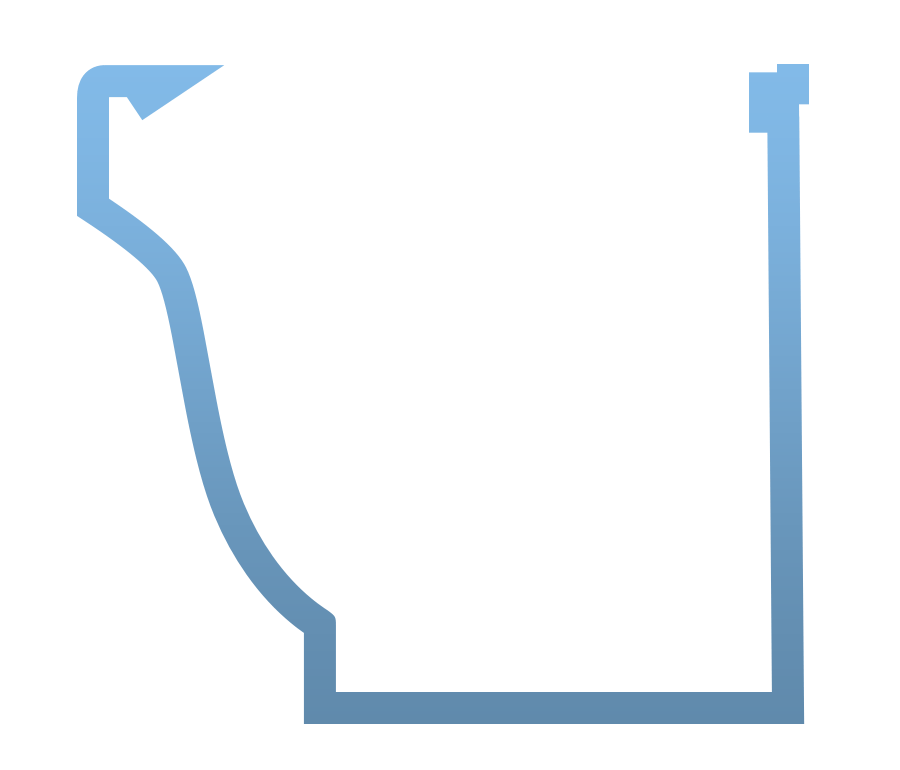
K-style gutters are widely used on steep rooflines because their profile carries more water than a similarly sized half round gutter. They also sit flat against the fascia, which gives the gutter a firm mounting surface and a clean roof edge line. For many homes, that mix of capacity and fit makes K-style the most practical choice.
For high-capacity gutters for steep roofs, size is the key decision. A 5-inch gutter may work fine on a moderate roof with simple drainage. A 6-inch gutter is more common on steep roofs, larger roof planes, long runs, valleys, and areas that receive runoff from upper roof sections. Aluminum, steel, and copper can all be used, but material affects lifespan more than capacity.
Explore Ace Gutter’s full range of gutter styles and sizing options to learn more about the factors that influence gutter capacity.
Good to Know: Increasing gutter width works best when downspouts are upgraded at the same time. A larger trough can still overflow when the outlets cannot move water away quickly enough.
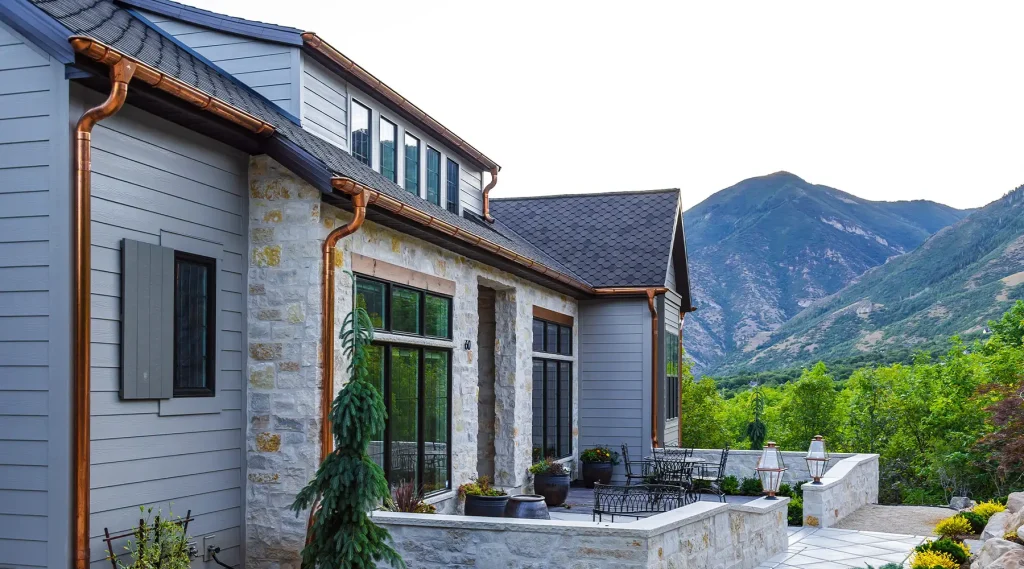
Half-Round and Box Gutters: When Architectural Style Drives Choice
Half-round gutters on a pitched roof can work when sized well and paired with enough downspouts. They show up often on historic homes, metal roofs, and homes where a softer roofline fits the design. Their main trade-off is capacity. A half-round profile usually carries less water than a K-style gutter of similar width.
Box gutters, sometimes called fascia gutters, fit many modern homes and custom rooflines. They can carry large amounts of water when sized and pitched well, but they need exact placement and strong support. The table below compares the main options for steep roofs.
| Gutter style | Capacity | Cost level | Maintenance | Steep roof fit |
| K-style | High | Moderate | Moderate | Strong fit for most steep roofs |
| Half-round | Moderate | Moderate to high | Easy to rinse when clear | Best when design is a top concern |
| Box | High when sized well | High | Depends on access and design | Strong fit for custom or modern homes |
Before You Decide: Compare appearance with capacity, support requirements, and future maintenance access. A gutter that complements the home should still be able to manage the roof’s actual runoff volume.
Installation and Maintenance Considerations for Steep Rooflines
A good gutter style can still fail if it’s installed with weak fasteners, poor pitch, or too few outlets. Steep pitch roof gutter installation needs close attention to hanger spacing, fascia strength, and slope. Some steep roofs benefit from tighter hanger spacing because fast-moving water and snow can add real force at the gutter edge.
Downspouts need the same care. A large gutter with too few downspouts can still overflow, since the water simply has nowhere to go. Gutter guards can reduce clogs from leaves and roof grit, which helps on steep roofs where ladder access is already risky. Regular seasonal cleaning and inspection help catch these issues before they lead to overflow.
What to Check First: During rainfall, note whether water overshoots the gutter, spills near valleys, or backs up around downspouts. These patterns help identify whether the issue involves capacity, placement, or restricted drainage.
Upper Roofline Gutters and Valley Management
Upper rooflines can send water into lower roof sections, which increases the load on the lower gutter. A home with dormers, stacked roof planes, or long valleys may need more capacity than its visible gutter length suggests. This is where 6-inch gutters for steep roofs are frequently a better fit than smaller sizes.
Valleys need special care because they collect water from two roof planes at once. Reinforced hangers, good outlet placement, and larger sections may be needed where water collects. In Utah winters, upper rooflines may also need ice control to reduce ice dams and frozen overflow.
Ice dams form when snow on a warm roof melts, refreezes at the colder eave, and then traps standing water that can work its way under the shingles. As such, gutters on steep, valley-heavy rooflines often need extra winter protection.
Key Insight: Upper roof runoff should be directed into a planned drainage path rather than released freely onto a lower roof. Uncontrolled discharge can overload lower gutters and increase wear on shingles and siding.

Choosing the Right Gutter System for Your Steep Roof
The best gutter choice for a steep roof is rarely based on style alone. K-style 6-inch gutters are a common answer for many steep rooflines, but half-round and box gutters may be the right fit for certain homes. The final choice should account for roof pitch, valley layout, upper rooflines, downspout routing, and local weather.
Careful sizing and skilled installation help keep homes safe, dry, and functional. The details are small, but they affect how well the system moves water away from fascia, siding, and the base of the home.
Protecting a steep-roof home starts with the right assessment. For a clear review of roof pitch, gutter size, and drainage needs, contact us for a gutter assessment.
Frequently Asked Questions
Can you put gutters on a very steep roof?
Yes, gutters can go on very steep roofs. Check the roof pitch, drainage area, and fascia condition first so the gutter size, hangers, and downspouts can match the speed and weight of the runoff.
What is the best gutter guard for a steep roof?
The best gutter guard fits both the gutter style and the local debris load. Mesh and solid cover guards can both work, but the choice should account for tree cover, snow, roof material, and how fast water reaches the gutter edge.
How often do gutters need cleaning on steep pitched roofs?
Cleaning depends on trees, storms, and roof material. Homes near pines or maples may need more frequent service, while gutter guards can stretch the time between cleanings. A yearly inspection helps set a safe schedule.
Should I choose 5K or 6K gutters for my steep roofline?
A 6K gutter is usually better for steep rooflines, large roof planes, and heavy runoff areas. A 5K gutter may fit smaller or moderate pitch roofs, but roof size, valleys, and downspout count should guide the final choice.
Do I need special fasteners or brackets for steep roof gutter installation?
Yes, steep roofs may need stronger fasteners, closer hanger spacing, or angle brackets. These parts help the gutter stay stable when fast water, snow, or ice add weight along the roof edge.

Need Help? Get a free assessment
Get a call back within 1 hour
(During business hours).
Recent Posts

Is Your Gutter System Ready for an El Niño Winter in Utah?
How Well-Maintained Gutters Can Increase Your Home’s Value
How to Improve Drainage and Water Flow in Aging Gutter Systems?
6 Factors That Can Shorten the Lifespan of Your Gutters

What to Know Before Installing Leaf Guards on Your Existing Gutter System?
Share
Recent Posts
Is Your Gutter System Ready for an El Niño Winter in Utah?
October 14, 2026
TL;DR: A very strong El Niño is forecast for the 2026-27 Utah winter, bringing warmer temperatures and more freeze-thaw cycles, not guaranteed snow....
How Well-Maintained Gutters Can Increase Your Home’s Value
October 13, 2026
TL;DR: Well-maintained gutters help preserve your home’s value by directing water away from the roof, siding, foundation, and landscaping. Regular cleaning, timely repairs,...
How to Improve Drainage and Water Flow in Aging Gutter Systems?
October 2, 2026
If you are seeing puddles around your foundation, streaks along the siding, or soggy spots in the yard, your gutters may be struggling...