June 13, 2026
Jud Smith
TL;DR:
K-style gutters handle heavy roof runoff efficiently while fitting most home designs. Available in 5-inch and 6-inch sizes with multiple materials, they balance cost, capacity, and appearance. Proper installation and sizing help reduce overflow, leaks, and seasonal water damage risks.
Here’s a stark reality: a one-inch rainfall over a 1,000 sq ft roof can send nearly 600 gallons of water through your drainage system, and a 4,500 sq ft lot can collect around 2,800 gallons in a single storm.
With that much water moving in a short span, clogged gutters or overflow during heavy rain can push runoff toward the foundation. This can slowly contribute to siding wear and moisture-related structural issues.
That is where K-style gutters come in as a natural solution. It offers a widely used residential solution that handles higher water volumes, while maintaining steady flow control and reducing overflow risks across different home layouts.
In this blog, you’ll learn everything about K-style gutters, how they function, sizing considerations, cost factors, installation steps, and how to judge if they fit your home.
What K-Style Gutters Are and Where They Fit Best
K-style gutters are among the most widely used residential gutter profiles in the United States, especially in regions with seasonal snow and rain variation like Utah.
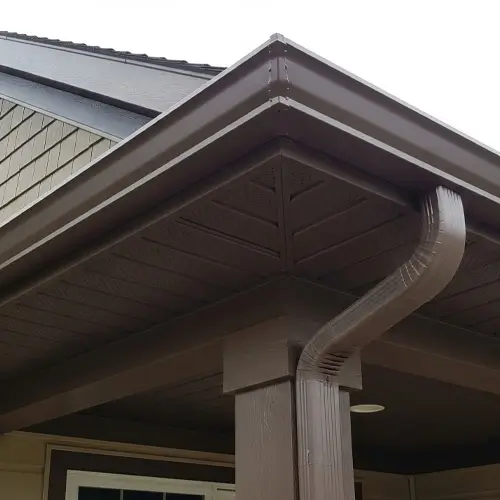
With a flat back and a decorative front edge, they blend with modern homes while carrying a higher water load than many rounded profiles. Homeowners prefer them for both: functionality and appearance.
These systems work well on homes that experience heavy roof runoff or winter snowmelt, where controlled drainage is necessary to protect siding, landscaping, and foundations. In many residential projects, k-style gutters are chosen as they balance capacity and cost in a practical way.
What This Means For You: If your home has long rooflines, steep slopes, valleys, or visible water spilling over the edge during storms, K-style gutters may offer the capacity and fit needed to manage runoff more effectively.
The Origin Behind the K-Style Name and Shape
The name comes from the profile’s shape. From the side, it resembles crown molding, which gives it a decorative look along the front face. In manufacturing terms, this profile is referred to as a “K” shape, even though the technical design is based on an ogee-style form.
Home Styles That Pair Well With K-Style Profiles
Flooding can develop quickly when water accumulates faster than the ground or drainage systems can handle. This makes roof runoff control an important part of protecting homes during heavy rainfall, especially in regions with seasonal storm activity.
K-style gutters are often chosen in this context as they sit neatly along fascia boards and roof edges, blending into the structure while still managing higher volumes of water effectively. Ranch-style homes, modern suburban builds, and renovated properties commonly use this profile for that balance of appearance and performance.
In many Utah neighborhoods, it remains a preferred option due to its clean look and dependable water handling during seasonal storms.
How It Works: The flat back of a K-style gutter helps it sit firmly against the fascia board, while the deeper front profile creates more room for water flow than many rounded profiles of similar width. This combination supports both appearance and drainage performance.
Sizes, Capacity, and Material Choices for K-Style Gutters
5-Inch vs 6-Inch K-Style Gutters and Drainage Capacity
Selecting between 5-inch and 6-inch systems depends on your roof area and slope. Larger roofs or steep pitches often demand more capacity.
- Many homeowners who compare K-style gutter sizes, find that 6-inch systems handle water more efficiently during heavy storms. This allows faster runoff movement.
- When it comes to residential construction, the standard residential gutter size k-style is 5 inches, though 6-inch systems are increasingly common in storm-prone areas.
- For properties with higher runoff levels, upgrading K-style gutter sizes can help reduce overflow risks during intense rainfall.
In Short: A 5-inch K-style gutter usually fits standard residential drainage needs, while a 6-inch system is often better for larger roofs, steeper pitches, long gutter runs, or homes with heavy runoff points.
Comparing Common Gutter Materials: Aluminum, Copper, Steel, and Vinyl
- Aluminum is lightweight and corrosion-resistant, offering a good balance of cost and durability with a typical lifespan of 20-30 years. It resists rust and is easy to install but can dent from impacts and may struggle under very heavy snow.
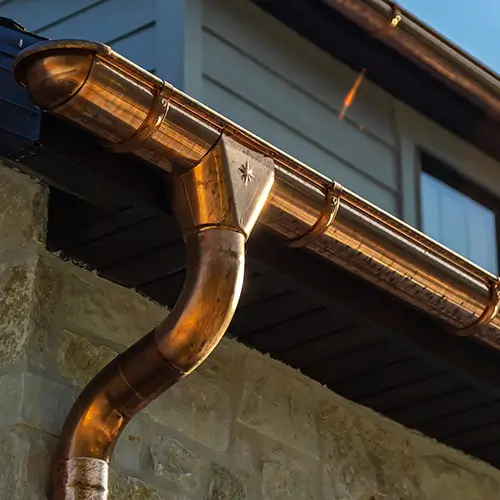
- Copper is a premium choice that lasts 50+ years and develops an attractive patina over time. It’s low-maintenance and visually striking but comes with a high upfront cost and higher theft risk.
- Steel provides excellent strength and impact resistance; galvanized steel typically lasts 20-40 years while stainless can exceed 40 years. It’s heavier and more durable in harsh conditions, though galvanized types can corrode and require more maintenance.
- Vinyl is an inexpensive, rust-proof option that’s easy to install and usually lasts 10-20 years. It’s best for mild climates because it can become brittle in cold weather and warp in heat.
Quick Comparison:
| Material | Best For | Key Consideration |
| Aluminum | Most residential homes needing balanced cost and durability | Can dent under impact, especially from ladders or debris |
| Copper | Premium homes focused on long lifespan and visual appeal | Highest upfront cost but longest lifespan |
| Steel | Homes needing maximum strength in harsh weather | Heavier material and may require rust protection over time |
| Vinyl | Budget-friendly homes in mild or mild-weather regions | Lower durability in extreme heat or freezing conditions |
Matching Gutter Size to Roof Pitch and Square Footage
Roof pitch and drainage area play a big role in how well a drainage system handles rainwater. Steeper roofs send water down faster, which often means the system needs more capacity to keep up. If the sizing is off, overflow can happen, especially during Utah’s seasonal storms.
Note: Utah snow and drainage conditions can vary widely by location and elevation. A home in a heavier snow-load area may need different gutter support, hanger spacing, or material choices than a home in a lower-elevation neighborhood.
Pros and Cons of K-Style Gutters for Utah Homes
Here’s a table highlighting the pros and cons of K-style gutters:
| Pros of K-Style Gutters | Cons of K-Style Gutters |
| These gutters carry more water than rounded profiles of similar width due to their squared interior design. | Inner corners can collect leaves and debris over time, especially near trees. |
| Their flat back also makes installation easier against fascia boards. | Needs periodic maintenance to avoid debris buildup. |
| In many residential upgrades, K-style gutters are chosen for this balance of efficiency and visual appeal. | Snow accumulation in winter can also add strain if maintenance is delayed. |
Watch Out: Ignoring seasonal maintenance can lead to hidden blockages that only show up during heavy rainfall or snowmelt periods.
K-Style Gutters Compared to Half-Round, Box, and Fascia Profiles
K-Style vs Half-Round on Looks, Capacity, and Cost
Half-round gutters offer a traditional look but carry less water than K-style systems. In contrast, K-style gutters provide higher capacity at a lower cost per linear foot. This makes them a practical choice for homes dealing with moderate to heavy rainfall without increasing material costs significantly.
K-Style vs Box Gutters for Residential and Commercial Use
Box gutters are often used in commercial or industrial buildings. K-style profiles are more common in residential settings due to easier installation and lower maintenance demands. They also fit standard home fascia boards more naturally, reducing structural adjustments during installation.
K-Style vs Fascia and Ogee Drainage Performance
Fascia-style systems integrate with the roof edge, while ogee profiles mirror decorative molding. K-style gutters, however, tend to offer better water-handling efficiency while still maintaining a clean, decorative front profile suitable for most home designs.
Quick Comparison: K-style gutters are generally the most balanced option for residential homes, offering higher water capacity and lower installation cost. Half-round systems prioritize aesthetics over performance, while box gutters are built for high-volume commercial drainage but require more complex installation.
Seamless vs Sectional K-Style Gutters
Seamless and sectional K-style gutters mainly differ in their built-quality and performance.
Seamless systems reduce the number of joints. This minimizes the chances of leaks and improves long-term durability. Sectional systems, on the other hand, are easier to install and replace in parts, but the seams can become weak points where leaks may form over time.
In regions like Utah, seamless systems are often preferred because temperature swings can cause materials to expand and contract. With fewer joints to stress, seamless gutters handle these shifts better and tend to last longer under changing weather conditions.
Bottom Line: Seamless K-style gutters are usually the better long-term option when leak prevention matters most. Sectional gutters can still work, but they depend more heavily on joint sealing and routine maintenance.
What Impacts K-Style Gutter Installation Costs in Utah?
The k style gutter cost to install mainly depends on material choice, home height, and total linear footage. Aluminum systems usually fall in a moderate price range, while copper options increase the overall cost due to material quality and longevity.
Downspouts, gutter guards, and slope adjustments also influence the final price. If you’re a homeowner, you can compare bundled options before starting a k style gutter installation project. This can help plan the budget more clearly and avoid unexpected add-ons.
Tip: Ask for the estimate to separate gutters, downspouts, guards, removal, and any fascia repairs. This makes it easier to compare bids fairly instead of only looking at the final total.
How K-Style Gutters Are Installed Step by Step
K-Style Gutter Installation Process: Step-by-Step Overview
A proper K-style gutter installation guide starts with careful measurement of roof edges and ends with checking how well water flows through the system. Each stage plays a role in aligning the gutters correctly, securing them firmly, and maintaining steady drainage toward downspouts.
- Step 1: The first step is to measure the roof edges accurately and mark layout points along the fascia for proper alignment.
- Step 2: Next, is to cut and prepare gutter sections to match the required lengths and roof design.
- Step 3: Once done, the experts fix brackets at regular intervals to support the gutters and maintain even spacing.
- Step 4: The natural step is to seal the joints and connect the sections. This allows for smooth water flow without leakage.
- Step 5: Finally, the slope is set toward downspouts and a water test is performed to confirm consistent drainage and flow.
What To Expect: A professional installation should always include a water flow test before completion to ensure no pooling or backflow issues remain.
DIY vs Hiring a Professional Utah Gutter Installer
Risks of Installing K-Style Gutters Yourself
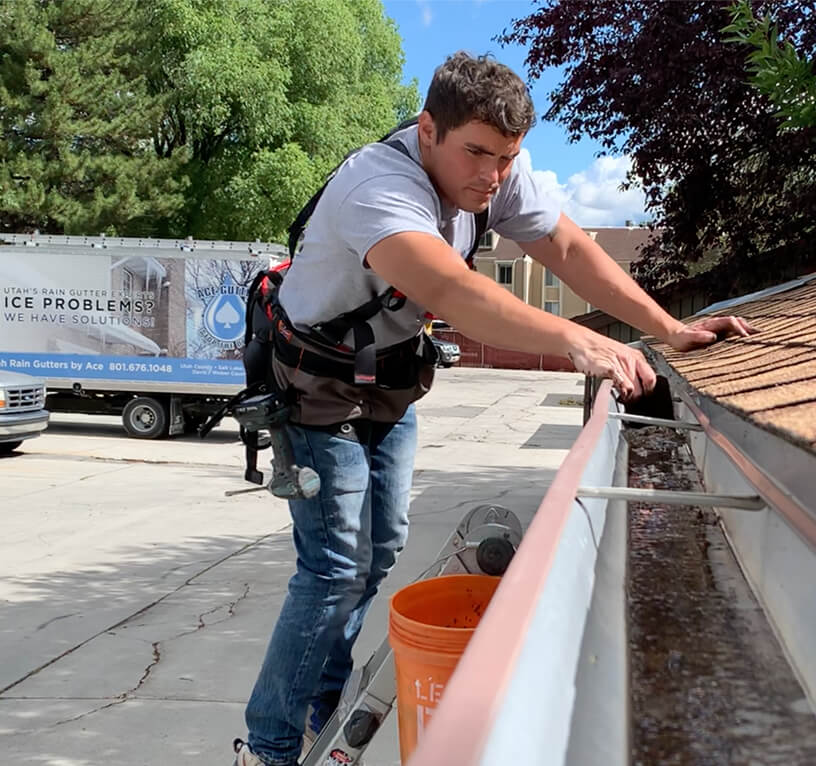
A Do-It-Yourself K-style gutter installation may seem straightforward, but small errors in slope, spacing, or fastening can affect how well the system handles water over time. Working at roof height without the right setup can also increase the chance of committing serious mistakes and hamper the safety.
What to Look for in a Local Gutter Specialist
While selecting a local gutter specialist in Utah, look for professionals who have experience with Utah’s weather conditions and material. This plays an important role when it comes to long-term performance.
Many professionals provide warranties along with post-installation support. This helps build the confidence and trust amongst homeowners, making them feel more secure. Some experts also offer system upgrades through options like 5K rain gutters. These are designed to improve water drainage management and overall system capacity.
Expert Perspective: Professionals evaluate roof geometry, drainage paths, and downspout placement—not just gutter installation—to ensure long-term performance.
K-Style Gutter Maintenance, Repairs, and Lifespan Tips
If you wish to keep your gutters in good condition, it all comes down to routine care, early issue detection, and preventive upgrades that can reduce long-term wear. Seasonal conditions in Utah demand these steps for maintaining steady performance.
Seasonal cleaning helps prevent buildup from leaves and snow, especially during fall and winter. Ice formation can also place stress on joints if water is not draining properly, making pre-winter preparation an important part of upkeep.
Common warning signs include sagging sections, leaks at seams, and overflow during rain. In some cases, k-style gutter replacement becomes necessary to restore proper performance, though small repairs can often extend system life before a full replacement is needed.
Adding gutter guards is another option that can reduce debris buildup and lower cleaning frequency. Homeowners can pair guards with k-style gutters to help maintain more consistent performance over time.
Signs To Watch For: Sagging sections, overflow during moderate rain, peeling fascia paint, and water pooling near foundations are early indicators of system issues.
Frequently Asked Questions About K-Style Gutters
How Long Do K-Style Gutters Last?
The lifespan of K-style gutters depends on the material, weather exposure, and maintenance levels.
- Aluminum gutters typically last 20-30 years and are the most common residential choice.
- Steel gutters last around 15-25 years but may need extra care to manage rust.
- Copper gutters can last 50+ years due to high corrosion resistance and natural patina formation.
- Vinyl gutters usually last 10-20 years and work best in milder climates.
Can a Leaky K-Style Gutter Be Repaired?
Yes, minor leaks can be sealed. In older systems, k-style gutter replacement may be more cost-effective if damage is widespread.
Do K-Style Gutters Add Value to a Home?
Well-installed systems improve drainage efficiency and protect structural elements, which supports property value over time.
Starting Your K-Style Gutter Project With Ace Gutter
A gutter system can shape how well a home handles various weather conditions such as rain, snow, and seasonal runoff. When talking about how well it performs, everything depends on the design choices, material selection, and installation quality.
We at Ace Gutter bring more than 25 years of experience in gutter installation and drainage solutions, working across a wide range of residential properties and weather conditions across Utah. Our work with K-style systems focuses on aligning design and installation with roof structure and water flow needs, helping homeowners get a system suited to their property.
Contact us at Ace Gutter to discuss your next big K-style gutter project.

Need Help? Get a free assessment
Get a call back within 1 hour
(During business hours).
Recent Posts
How to Improve Drainage and Water Flow in Aging Gutter Systems?

6 Factors That Can Shorten the Lifespan of Your Gutters

What to Know Before Installing Leaf Guards on Your Existing Gutter System?

How to Fix Standing Water in Gutters and Prevent Future Damage

What Type of Gutter System Works Best With a Metal Roof?
Share
Recent Posts
How to Improve Drainage and Water Flow in Aging Gutter Systems?
October 2, 2026
If you are seeing puddles around your foundation, streaks along the siding, or soggy spots in the yard, your gutters may be struggling...
6 Factors That Can Shorten the Lifespan of Your Gutters
September 24, 2026
TL;DR: Weather, clogs, poor maintenance, installation issues, material quality and physical damage can shorten gutter lifespan. Regular upkeep and timely repairs can help...
What to Know Before Installing Leaf Guards on Your Existing Gutter System?
September 16, 2026
TL;DR: Leaf guards can usually be installed on existing gutters if the system is secure, properly sloped, and draining correctly. The right guard...