September 8, 2026
Jud Smith
TL;DR:
Standing water in gutters is usually caused by debris buildup, poor gutter slope, blocked downspouts, or damaged sections that prevent water from draining properly.
Rain has stopped, the sky has cleared, but water is still sitting in the gutter instead of draining away. Is this a common scenario for you?
Well, that lingering water is a warning sign. Standing water in gutters points to a drainage problem that rarely fixes itself. Left alone, it can grow into a bigger, more expensive repair.
Some signs are easy to spot. Homeowners might notice water dripping over the edges, streaks along the siding, mosquitoes gathering near the roofline, or gutters that sag in the middle. Each one hints that water is sitting where it should be flowing.
This guide covers what causes the problem, how it damages a home, and how to correct it. It explains how to inspect the system, make safe repairs, and set up habits that keep water moving season after season.
What Causes Standing Water in Gutters
Gutters work by carrying water toward downspouts at a slight downward angle. When that flow stops, water collects and stays put. A few common issues cause standing water in gutters, and most are easy to identify once the warning signs are clear.
Here are some of the instances:
Debris Buildup and Clogs
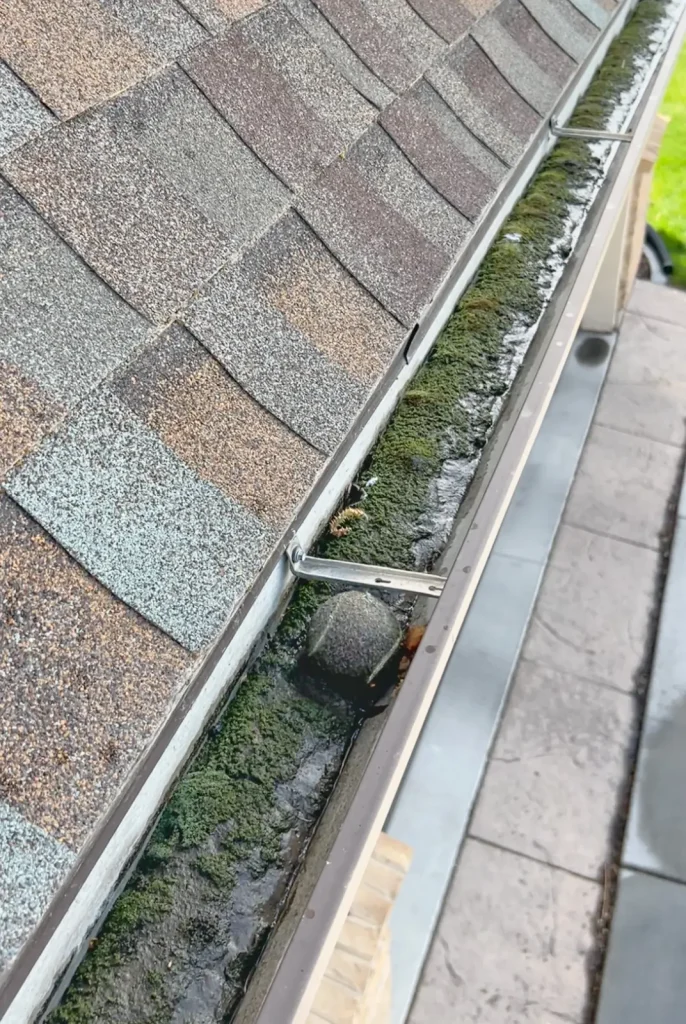
Over time, leaves, twigs, shingle grit, and dirt settle into the gutter channels. As this debris packs down, it narrows the path to the downspout until water can no longer drain properly. That is why clogged gutters are a common cause of pooling, especially when trees hang near the roof.
Poor Gutter Slope
Gutters should slope about ¼ inch for every 10 feet to help water drain properly. If the slope is too flat or angled incorrectly, water can pool, causing sagging, leaks, and loose fasteners.
Undersized or Damaged Gutters
Gutters that are too narrow for a roof’s runoff will overflow during heavy rain. Dents, cracks and separated seams also trap water. A system sized for a smaller roof or a milder climate may struggle during peak storms.
Signs To Watch For:
- Water pooling in the same gutter section
- Slow drainage toward the downspout
- Visible sagging or low spots
- Loose or damaged gutter hangers
- Debris blocking the gutter channel
- Overflow during moderate or heavy rain
Why Pooling Water Damages Your Home
Water that lingers does not stay in the gutter. It seeps into wood, drips down walls and pools near the base of a home. Water pooling in gutters slowly damages the structures meant to protect a property.
Fascia and Soffit Rot
The fascia board behind the gutter absorbs moisture from standing water. Over months, the wood softens, warps and rots. Once the fascia fails, the gutter loses its anchor and begins to pull away from the roof.
Foundation and Basement Issues
Overflowing gutters send water straight toward the foundation, where it can enter cracks, seep into basements, and gradually shift the surrounding soil. This kind of damage can become expensive quickly. In fact, just five inches of water can cause more than $25,000 in damage.
Mold and Pest Concerns
Standing water creates damp conditions that can contribute to mold growth along the roofline, behind walls, or near attic spaces. It can also attract mosquitoes and other pests that thrive around moisture.
How It Works: Standing water adds weight to the gutter while repeated overflow keeps nearby materials damp. Over time, this combination can lead to sagging, wood damage, leaks, and moisture around the foundation.
How to Diagnose Gutter Drainage Problems
Before any repair begins, find the source of the trouble. A short inspection reveals whether the issue is a clog, a slope problem or worn-out hardware. This step helps a homeowner fix gutter drainage problems without guessing.
Check for Level or Sagging Sections
Stand back and look at the gutter line from the ground. Dips, bows and sagging spots reveal where water collects. From a stable ladder, a level confirms the direction of the slope along each run.
Test Water Flow with a Hose
Run a garden hose into the gutter near the end farthest from the downspout. Watch how the water moves. If it drains cleanly, the slope is fine. If it pools or backs up, the trouble spot is easy to locate.
Inspect Downspouts for Blockages
Downspouts clog just as easily as the channels above them. Tap the side of the downspout and listen for a dull, packed sound. Feed the hose into the top and check whether water exits freely at the bottom.
Step By Step:
- Check the gutter line for dips or sagging
- Run water through the gutter to test flow
- Watch for pooling or slow drainage
- Check whether water exits the downspout freely
- Inspect hangers, seams, and outlets near the trouble spot

Steps to Fix Gutter Drainage Problems
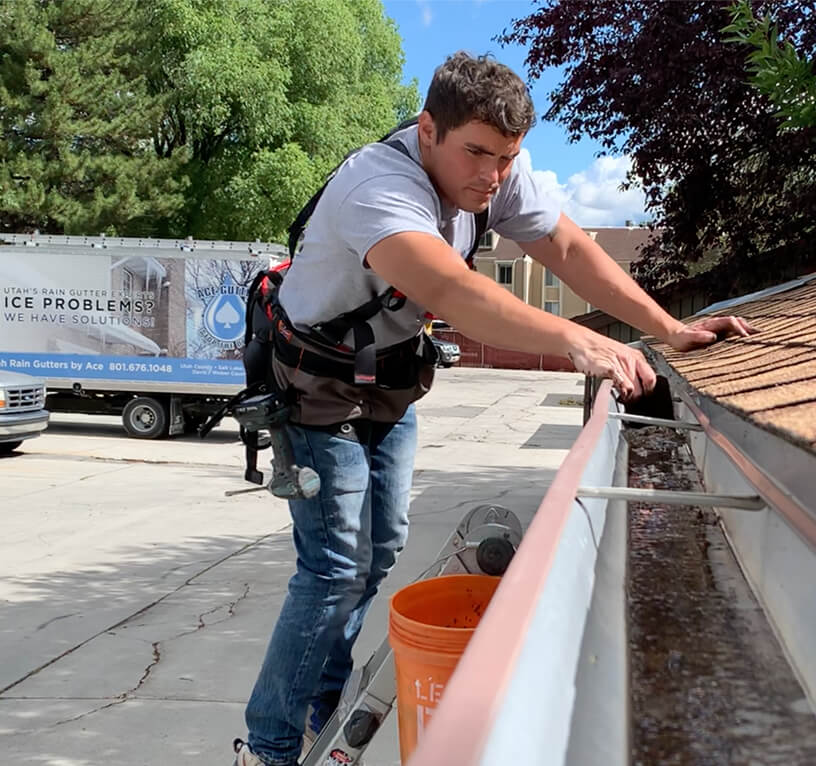
Once the cause is known, most repairs are within reach for a careful homeowner. Work from a sturdy ladder, wear gloves and keep a bucket handy. These steps can help clear clogged gutters and restore proper flow:
- Clean out debris and clogs. Scoop out leaves and sludge by hand or with a gutter scoop. Flush the channel with a hose, then clear any packed material from the downspout using the water pressure or a plumber’s snake.
- Adjust slope toward downspouts. Loosen the hangers along a flat section and reset them so the gutter drops slightly toward the nearest outlet. A quarter inch per 10 feet is the target. Retighten each hanger once the angle is correct.
- Repair sagging or loose sections. Replace worn hangers and add new ones every two feet for support. Seal small leaks and separated seams with gutter sealant. Straighten bent sections or replace pieces that are cracked beyond repair.
Next Step: After completing the repair, run water through the gutter again to confirm it flows smoothly toward the downspout. If pooling remains, the slope or damaged section may need further adjustment.
When to Repair or Replace Gutters
A full replacement isn’t always necessary. The best option depends on the extent of the damage and how well the gutters work after cleaning. If they continue to overflow after repairs, the problem may be more serious.
Here’s a simple table that you can refer to to make the right decision:
| Situation | Repair | Replace |
| Minor clogs | Yes | No |
| Persistent gutter overflow | Sometimes | Sometimes |
| Rust, cracks, or separation | No | Yes |
How to Prevent Future Gutter Damage
A few habits can keep water pooling in gutters from returning and extend the life of the system. Here are some of the ways:
Seasonal Cleaning Schedule
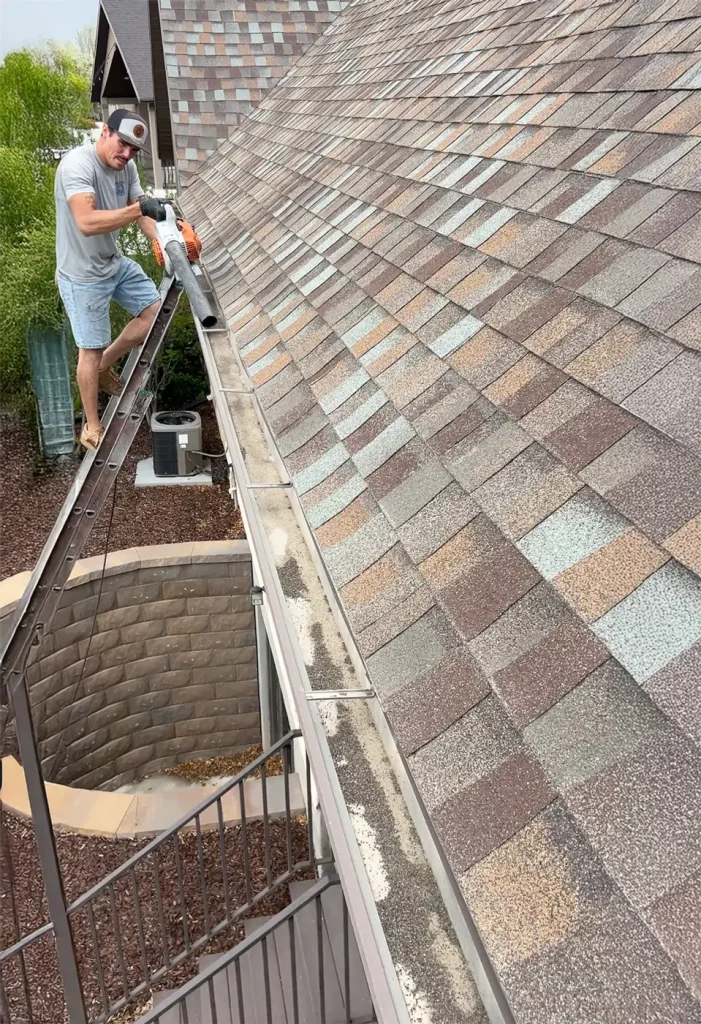
Clean gutters at least twice a year, in spring and fall. Homes surrounded by trees may need attention every few months. Marking the dates on a calendar keeps cleanings from slipping past.
Install Gutter Guards
Guards and mesh screens block leaves while letting water pass through. They reduce how often anyone climbs a ladder and cut down on clogs. Quality guards pay for themselves through fewer cleanings and repairs.
Extend Downspouts Away from Foundation
Add extensions or splash blocks that carry water from the home. Directing runoff away from the foundation protects the very problem area that standing water threatens most.
Prevention Checklist:
- Clear gutters in spring and fall
- Remove debris after major storms
- Check gutter guards for buildup
- Inspect for sagging or loose sections
- Keep downspouts clear and extended away
- Test water flow after cleaning
Utah Gutter Maintenance Tips to Prevent Standing Water
Utah’s recent weather patterns can change how much water moves through a gutter system. The state’s 2026 snowpack was the lowest on record, while winter temperatures reached record highs. For homeowners, those conditions make it especially important to keep gutters prepared for sudden snowmelt, rain events, debris buildup, and freeze-thaw cycles.
Here are some of the pro tips for Utah homeowners:
- Prepare for sudden snowmelt: Warmer winter temperatures can cause accumulated snow to melt quickly, sending more water through gutters in a short period. Clear leaves and debris before temperatures rise so water can move freely through the system.
- Check gutters after freeze-thaw cycles: Repeated freezing and thawing can loosen fasteners, shift gutter sections and affect their slope. Inspect for sagging or standing water after periods of temperature swings.
- Clear gutters before spring storms: Utah’s spring weather can bring rain alongside snowmelt. Remove winter debris early and check that downspouts can handle the added flow without backing water up into the gutters.
- Inspect after high winds: Wind can carry branches, leaves and grit into gutters, creating blockages before the next rain or snowmelt event. A quick inspection after strong winds can help catch debris and loose sections early.
- Watch for standing water during dry periods: Low snowpack does not mean gutters can be ignored. Utah’s weather can shift between dry conditions and sudden precipitation, so check that water still moves freely through the channels and downspouts when rain arrives.
Utah Seasonal Gutter Check:
- Watch for ice buildup, loose fasteners, and sagging
- Clear debris before snowmelt and seasonal rain
- Check drainage after storms and high winds
- Remove leaves and grit before winter weather arrives
Final Thoughts
Fixing standing water in gutters comes down to a clear routine that includes finding the cause, clearing the clogs, correcting the slope and repairing worn sections. From there, seasonal cleanings, guards and extended downspouts keep water moving where it belongs.
Since 1998, Ace Gutter has helped Utah homeowners and business owners protect their properties with professional gutter cleaning, repairs and installations. As local gutter experts, our team understands how Utah’s rain, snow and ice affect drainage systems year-round.
Request a quote from us today.
Frequently Asked Questions
Why does water sit in gutters?
Water sits because something blocks or slows the flow to the downspout. The usual causes are debris clogs, an incorrect slope or damaged sections that trap water.
How often should gutters be cleaned?
Clean gutters at least twice a year, once in spring and once in fall. Homes with many nearby trees may need cleaning three or four times a year.
Can I fix the gutter slope myself?
Yes, adjusting slope is a manageable task for many homeowners. Loosen the hangers, reset the gutter to drop a quarter inch per 10 feet toward the downspout, then retighten. Work from a stable ladder for safety.
Do gutter guards stop all clogs?
No, guards reduce debris but do not remove the need for maintenance. Fine grit and small particles can still collect, so occasional cleaning keeps the system working well.
Will pooling water always damage my home?
Not immediately, but the longer it sits, the greater the risk. Standing water can rot fascia, reach the foundation and encourage mold, so acting early prevents costly repairs.

Need Help? Get a free assessment
Get a call back within 1 hour
(During business hours).
Recent Posts

6 Factors That Can Shorten the Lifespan of Your Gutters

What to Know Before Installing Leaf Guards on Your Existing Gutter System?

How to Fix Standing Water in Gutters and Prevent Future Damage

What Type of Gutter System Works Best With a Metal Roof?

How to Know When Your Chimney Cap Needs Replacement
Share
Recent Posts
6 Factors That Can Shorten the Lifespan of Your Gutters
September 24, 2026
TL;DR: Weather, clogs, poor maintenance, installation issues, material quality and physical damage can shorten gutter lifespan. Regular upkeep and timely repairs can help...
What to Know Before Installing Leaf Guards on Your Existing Gutter System?
September 16, 2026
TL;DR: Leaf guards can usually be installed on existing gutters if the system is secure, properly sloped, and draining correctly. The right guard...
How to Fix Standing Water in Gutters and Prevent Future Damage
September 8, 2026
TL;DR: Standing water in gutters is usually caused by debris buildup, poor gutter slope, blocked downspouts, or damaged sections that prevent water from...