June 16, 2026
Jud Smith
TL;DR:
Downspout clogs, poor placement, and sizing issues trap meltwater and cause ice in gutters and downspouts during winter. Fixing these drainage gaps helps maintain flow and reduce ice dam risk while protecting the roof and foundation from freeze damage.
Roof problems in winter trace back to one simple point: how water drains off the structure. When melting snow reaches the edges and loses momentum, it can refreeze and slowly form thick ice ridges that push water backward under shingles.
This chain reaction is often linked to downspout mistakes, where drainage paths are not built for repeated freeze cycles. Once that happens, water has minimal places to go. This increases the chance of ice in gutters and downspouts forming along the edges.
If you’re a homeowner curious to know what causes ice dams in gutters, well, there are major three factors working together:
- Heat escaping from the attic, melting snow
- Melting snow during the day
- Refreezing overnight along colder sections
Winter roofs go through a constant back-and-forth between warmth and cold, and that small shift changes everything. Snow melts a little when temperatures rise, then refreezes when it drops again, gradually forming hard ice layers that interrupt normal water movement.
Downspouts step in as the exit route for this meltwater. When they slow down or get clogged, water begins to pool in the gutters instead of draining away. That buildup increases the chances of ice in gutters and downspouts and can push freezing points further along the roof edge.
In this blog, you’ll learn about spotting and fixing common drainage mistakes that lead to winter ice buildup and how you can fix those.
Mistake #1: Leaving Downspouts Clogged with Fall Debris
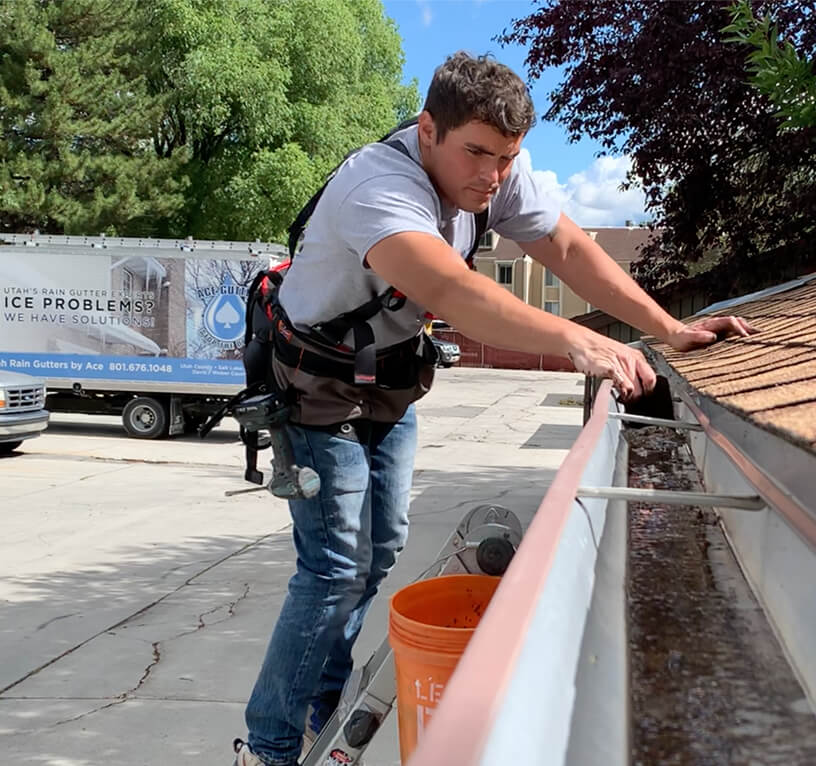
One of the most overlooked downspout mistakes is allowing seasonal debris to stay inside the system after autumn. Leaves, pine needles, and dirt restrict flow and create pockets where water collects and freezes.
Once temperatures drop, even a small blockage can turn into a solid ice barrier, increasing clogged downspouts problems across the entire drainage line.
Here are some common signs that your downspout may already be blocked:
- Slow drainage during rainstorms
- Water overflowing near roof edges instead of flowing through the system
- Visible frost or ice buildup around the downspout opening
During extended periods of freezing weather, these warning signs can turn into ice in gutters and downspouts, blocking the flow of water and preventing proper drainage.
What to avoid: Letting leaves and debris sit in downspouts over winter. Even partial blockage can freeze quickly and fully stop drainage during snowmelt cycles.
Mistake #2: Too Few or Undersized Downspouts for Your Roof
Your roof size and slope determines how much water needs to be carried away. If downspouts are too small or too few, water tends to move slower than usual, especially during snowmelt. This is one of the downspout mistakes that leads to repeated freezing cycles as the water lingers longer in exposed sections.
The General Rule for Downspout Spacing
A single downspout can only handle a limited amount of runoff. Larger roofs typically need multiple downspouts so water can drain efficiently instead of backing up in the gutter during snowmelt.
Why 3×4 Beats 2×3 in Snowy Climates
Larger 3×4 downspouts can move more water in less time. This helps reduce downspout drainage problems and lowers the chance of water sitting long enough to freeze inside the system.
What to avoid: Routing water through colder roof zones like valleys or north-facing slopes. These areas freeze faster and repeatedly trap meltwater.
Mistake #3: Poor Downspout Placement Near Roof Problem Areas
Poorly placed downspouts can create drainage bottlenecks just as easily as undersized ones. When water is directed through colder sections of the roof, it is more likely to refreeze before fully draining, creating recurring blockages.
Valleys and North Facing Slopes
Areas such as valleys and north facing slopes receive less sunlight. This increases the chance of ice in gutters and downspouts, forming repeatedly even after partial melting.
Keeping Downspouts Away from Walkways
Poor placement near walking paths also creates safety concerns during refreezing periods. It can contribute to repeated freeze-back near the foundation.
What to avoid: Routing water through colder roof zones like valleys or north-facing slopes. These areas freeze faster and repeatedly trap meltwater.
Mistake #4: Discharging Water Too Close to the Foundation
Where your downspouts release water matters just as much as how well they drain. When meltwater is discharged too close to the house, it can refreeze around the foundation as temperatures drop.
Over time, this creates a cycle where water repeatedly freezes and expands in the same area. Short downspout extensions are a common cause of this issue. They can contribute to ongoing downspout drainage problems during winter.
Extending water farther away from the home helps reduce refreezing near the foundation while protecting surrounding landscaping and structural areas. When meltwater exits too close to the house, it refreezes at ground level. This creates a loop where water repeatedly freezes and expands near the structure.
What to avoid: Short or missing extensions. Keeping meltwater near the foundation increases freeze cycles and long-term structural moisture risk.
Mistake #5: Skipping Heat Cables on Vulnerable Downspouts
In northern climates, mechanical drainage alone may not be enough to keep water moving through the system. During extended freeze periods, even properly sized gutters and downspouts can develop ice blockages. Heat cables help maintain open flow paths by creating controlled warming zones that reduce freeze buildup along gutters and downspouts.
How Ice Melt Roof Systems Work
Ice melt systems apply heat to key drainage areas, helping meltwater continue flowing instead of freezing inside the system. This reduces the likelihood of ice accumulating at roof edges and inside downspouts.
Self-Regulating vs. Constant Wattage Cables
Heat cables generally fall into two categories. Self-regulating cables adjust their heat output based on surrounding temperatures, while constant wattage cables provide the same level of heat regardless of conditions.
Pairing Heat Cables with Gutter Heating
When heat cables are combined with gutter heating systems, they help reduce the risk of ice in gutters and downspouts, particularly during long periods of freezing weather. This approach directly addresses one of the most common factors behind what causes ice dams in gutters by helping meltwater drain away before it can refreeze along the roof edge.
What to avoid: Ignoring repeat-freeze sections. If certain areas always ice up, passive drainage alone may not be enough during extended freezes.
Mistake #6: Ignoring Loose, Sagging, or Disconnected Sections
Small gaps in joints can interrupt water movement. With time, these weak points allow leaks and freezing inside exposed sections. This increases winter stress on the system. Moreover, loose connections reduce flow speed. This leads to a recurring downspout mistake that worsen during heavy snowfall.
What to avoid: Small gaps or weak joints. Even minor disconnection slows water flow and creates freezing points inside the system.
Mistake #7: Gutters That Are Not Sloped Toward the Downspout
Without proper slope, water pools inside gutters instead of flowing toward the downspout. During freezing nights, this standing water can turn into frozen gutters and ice buildup. As the ice expands, it can block the remaining water from draining, creating additional pressure along the roof edge and worsening downspout drainage problems.
What to avoid: Flat or backward-sloped gutters. Standing water freezes quickly and blocks the entire drainage path during cold nights.
Mistake #8: Using the Wrong Downspout Material for Cold Climates
Not all downspout materials perform the same way during winter. Repeated freeze-thaw cycles place additional stress on drainage systems, and some materials handle these conditions better than others.
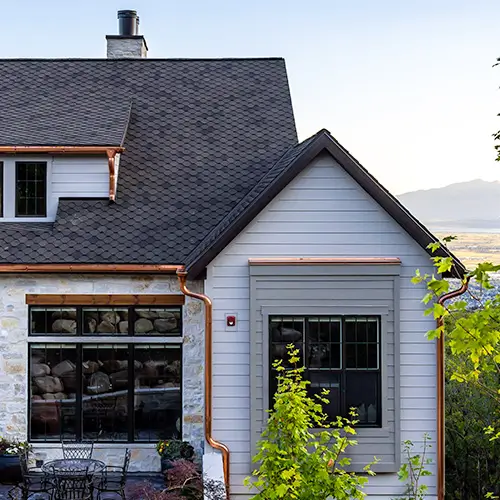
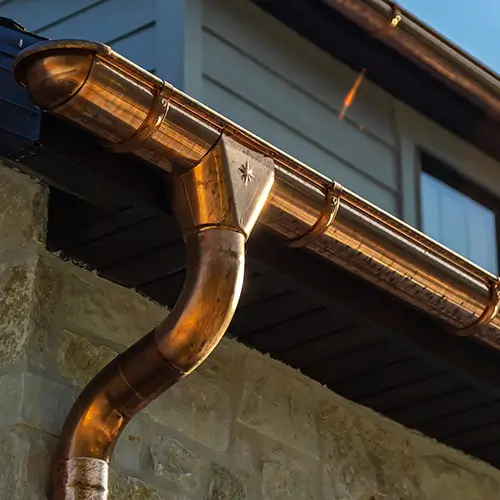
In general, aluminum, steel, and copper downspouts are more durable under freezing temperatures and repeated expansion and contraction. Vinyl, on the other hand, can lose flexibility in cold weather, making it more prone to cracks, leaks, and recurring drainage issues.
What to avoid: Materials that become brittle in freezing temperatures. Weak expansion tolerance leads to cracks, leaks, and repeated winter failures.
Mistake #9: Skipping a Pre Winter Professional Inspection
Most gutter and downspout issues remain hidden until snow and ice expose them.
Here, a pre-winter inspection helps identify weak points before freezing temperatures create larger problems. During an inspection, professionals typically check gutter slope, loose joints, potential blockage areas, and insulation-related concerns that can contribute to such mistakes and increase the risk of winter drainage issues.
What to avoid: Waiting until winter exposes the problem. By then, freezing cycles make repairs harder and damage more expensive.
How to Fix These Downspout Mistakes Before Snow Falls
Fixing minor issues before winter arrives can help prevent larger and more expensive damage later in the season. Here are some of the steps that can improve drainage and provide a practical way to prevent ice buildup:
- The DIY way: clear debris, check gutter slope, and flush drainage channels. These basic tasks can reduce risks tied to what causes ice dams in gutters and help water move through the system more efficiently.
- The professional way: Call a gutter professional if problems keep returning. Repeated blockages, sagging sections, or ongoing freezing are often signs of deeper structural or drainage issues.
- The additional layer: Consider adding gutter guards during repairs. Protective systems help reduce debris buildup and can limit ice in gutters and downspouts during long winter months.
Step By Step: Start by clearing debris, then test water flow through the gutters and downspouts. Next, check whether water drains away from the foundation, and finally, call a professional if the same section keeps clogging, leaking, or freezing.
The Real Cost of Ignoring Downspout Problems All Winter
Downspout problems rarely stay limited to the drainage system. When water backs up and freezes repeatedly, it can lead to roof leaks, insulation damage, and moisture buildup inside the home. In fact, just five inches of water can cause more than $25,000 in property damage.
With time, excess moisture can affect ceilings, walls, indoor comfort, and energy efficiency. Many of these costly repairs can be traced back to recurring drainage issues that were left unresolved before winter temperatures arrived.
Red Flag: If you notice recurring ice buildup in the same gutter sections every winter, that is often a sign of an underlying slope, sizing, or blockage issue—not just seasonal weather conditions.
FAQs About Downspouts and Ice Dams
Can Heat Cables Alone Eliminate Ice Dams?
Heat cables help reduce freezing in gutters and downspouts by keeping water pathways open, but they cannot completely eliminate ice dams on their own. They work best when combined with proper drainage, attic insulation, and ventilation to address the root causes of ice dam formation.
How Often Should Downspouts Be Cleaned in Winter?
Downspouts should be cleaned before winter begins and inspected periodically throughout the season. Regular checks during prolonged cold spells can help reduce clogged downspouts problems and prevent ice-related blockages.
Will Gutter Guards Prevent Ice Dams?
Gutter guards can help keep leaves, pine needles, and other debris out of the system, improving water flow. While they can reduce buildup, they do not completely prevent the freeze-thaw cycles that contribute to ice dam formation.
How Ace Gutter Can Get Your Home Ready for Winter
Winter preparation focuses on keeping water paths open, reducing freeze buildup, and improving drainage efficiency. Addressing downspout mistakes early helps maintain steady water movement during snowmelt cycles.
With 25+ years of experience handling gutter, drainage, and ice management challenges, we at Ace Gutter help homeowners identify problem areas before winter weather exposes them. From system inspections and repairs to customized solutions for freeze-prone sections, our professionals focus on keeping gutters and downspouts functioning efficiently throughout the season.
Contact us today to prepare your gutter system for the winter season ahead.

Need Help? Get a free assessment
Get a call back within 1 hour
(During business hours).
Recent Posts
How to Improve Drainage and Water Flow in Aging Gutter Systems?

6 Factors That Can Shorten the Lifespan of Your Gutters

What to Know Before Installing Leaf Guards on Your Existing Gutter System?

How to Fix Standing Water in Gutters and Prevent Future Damage

What Type of Gutter System Works Best With a Metal Roof?
Share
Recent Posts
How to Improve Drainage and Water Flow in Aging Gutter Systems?
October 2, 2026
If you are seeing puddles around your foundation, streaks along the siding, or soggy spots in the yard, your gutters may be struggling...
6 Factors That Can Shorten the Lifespan of Your Gutters
September 24, 2026
TL;DR: Weather, clogs, poor maintenance, installation issues, material quality and physical damage can shorten gutter lifespan. Regular upkeep and timely repairs can help...
What to Know Before Installing Leaf Guards on Your Existing Gutter System?
September 16, 2026
TL;DR: Leaf guards can usually be installed on existing gutters if the system is secure, properly sloped, and draining correctly. The right guard...