April 28, 2026
Jud Smith
The gutters haven’t been cleaned in two seasons. A heavy rainstorm rolls through, and water runs straight down the foundation wall. A few weeks later, there’s a damp smell in the basement. By the time a homeowner traces it back to the gutters, the damage is already inside the house.
Water damage and freezing account for nearly 23% of all home insurance claims, with the average claim topping $15,400, according to a 2025 report from This Old House. For many homeowners, clogged gutters are the contributor they never saw coming.
For Utah homeowners, the stakes are higher than most. Snowmelt and dry summers that crack soil around the foundation create conditions where gutter maintenance isn’t optional. Staying ahead of it is the difference between a dry basement and costly flooding repairs.
Here’s what you’ll learn in this guide:
- How clogged gutters direct water toward the foundation
- The warning signs that water is already working its way in
- How Utah conditions make the problem worse
- What regular gutter cleaning does to prevent basement leaks
The Path From Clogged Gutters to a Wet Basement
Gutters have one job. Move rainwater off the roof and away from the house. When clogged rain gutters block that path, water finds another way down, straight toward the foundation.
Understanding how that happens makes it easier to see why gutter maintenance is a basement issue, not just a roofline one.
1. Where the Water Goes When Gutters Fail
When blockages fill the gutter system, water backs up and spills over the sides. That overflow doesn’t land in the yard. It lands directly against the exterior walls at the base of the house.
From there, gravity pulls it down along the home’s foundation rather than through the downspouts and away.
2. How Overflow Saturates the Soil Around the Foundation
Soil around the foundation absorbs that overflow quickly, especially after repeated rain. Once saturated, it holds water against the foundation wall for days.
Utah has clay-heavy soil that expands when wet and contracts when dry. This cycle puts consistent pressure on foundation walls with every storm.
3. The Path Water Takes Into the Basement
Saturated soil creates hydrostatic pressure against the foundation wall. That pressure pushes water through the smallest cracks, gaps around pipes, and weak joints in the masonry.
Most basement leaks don’t come from dramatic flooding. They come from water finding its way through points that were never designed to hold it back.
Warning Signs Your Gutters Are Affecting the Foundation
Most homeowners don’t connect a leaky basement to their gutters right away. The signs show up gradually, both outside along the foundation line and inside the basement itself. Catching early signs keeps a maintenance issue from turning into a structural repair.
Gutters Overflowing During Rain
Overflow during heavy rain is the most visible indicator that blocked gutters are redirecting water toward the house. Water spilling over the front edge flows to the base of the foundation wall rather than through the downspouts as designed.
After the storm passes, check the ground directly below the gutterline. Erosion channels or bare patches in the landscaping point to repeated overflow hitting the same spot season after season.
Staining, Cracks, and Moisture Inside the Basement
White chalky water stains on basement walls, known as efflorescence, form when water moves through concrete and leaves mineral deposits behind. Musty smells in the basement are another early sign that moisture is seeping through the foundation.
Hairline cracks along the base of the wall and damp patches on the basement floors carry the same message. Water doesn’t need a large opening to get in. It follows the path of least resistance through joints, gaps around pipes, and any point where the masonry has begun to weaken.
| Warning Sign | Location | What It Indicates |
| Overflowing gutters during rain | Exterior | Blocked gutters redirecting water |
| Erosion below downspouts | Exterior | Repeated overflow in the same spot |
| Water is pooling at the foundation | Exterior | Drainage system failure |
| Efflorescence on walls | Interior | Moisture moving through concrete |
| Hairline cracks at the base of the wall | Interior | Hydrostatic pressure buildup |
| Damp patches on the basement floor | Interior | Water is entering through the foundation |
The Long-Term Damage Clogged Gutters Cause
Water that finds its way to the foundation doesn’t stop working once the rain does. It sits in the soil and puts steady pressure on structures that weren’t built to absorb it. According to iPropertyManagement, 98% of basements experience some form of water damage over their lifetime.
Much of that damage traces back to drainage problems that started at the roofline. Damaged gutters and blocked downspouts are rarely the first thing a homeowner suspects, but the connection to basement leaks and foundation flooding is direct and well-documented.
Foundation Cracks and Soil Erosion
Repeated water exposure weakens the soil around the foundation over time. In Utah, where clay soil shifts dramatically between wet and dry seasons, that cycle accelerates. Each round of saturation and contraction puts lateral pressure on foundation walls that compounds with every storm.
Cracks that start small don’t stay that way. Water enters, freezes in winter, and expands the opening further. What begins as a hairline fracture grows into a gap wide enough to allow significant moisture intrusion, and at that point, the repair moves from maintenance to structural territory.
Mold, Moisture, and Structural Risk
Moisture that gets into a basement doesn’t dry on its own in most cases. Basements have limited airflow, and once humidity levels rise, mold takes hold within 24 to 48 hours. Left unchecked, mold growth spreads across walls and wooden support structures, leading to deeper problems.
Wood joists and support beams that stay damp begin to rot and lose load-bearing strength. That kind of structural deterioration is slow and largely invisible until a professional inspection uncovers it. By then, the repair cost reflects months or years of undetected moisture working its way through the framing.
Why Utah Homes Face a Higher Risk
Utah’s climate accelerates gutter-related damage in ways that catch homeowners off guard. Seasonal debris and soil composition make a neglected gutter system more costly here than in milder climates.
Clay Soil and Freeze-Thaw Pressure
Utah’s clay-heavy soil absorbs water slowly and holds it longer than sandy or loamy ground. When gutters overflow repeatedly and downspouts back up, the resulting saturation builds up against the home’s foundation rather than draining away.
Winter adds another layer. Water that soaks into foundation cracks freezes and expands, widening the opening with each hard frost. Ice dams along the roofline compound the problem, sending additional water down the exterior walls and toward the foundation.
By spring, those openings allow significantly more moisture intrusion than they did the previous fall.
Cottonwood Season and Storm Patterns
Utah’s cottonwood season hits the gutter system hard and fast. Fluff accumulates in downspouts within days and compresses into a dense mat that completely blocks water flow. A single spring storm hitting packed gutters sends rainwater straight over the sides and down the foundation wall.
Late summer monsoon storms arrive quickly and drop significant rain in short bursts. Gutters that haven’t been cleared since spring can’t protect the home’s foundation from that volume. The blocked downspouts then send the overflow exactly where it shouldn’t go.
How Gutter Maintenance Prevents Basement Leaks
Keep the gutter system clear, and rainwater moves away from the house the way it was designed to. Let blockages build up, and the consequences work their way down to the basement. Regular gutter cleaning is the most direct way to prevent basement flooding before it starts.
Cleaning Frequency for Utah Homes
Most Utah homes need gutter cleaning twice a year. Late spring clears cottonwood fluff and storm debris before summer heat sets in. Late fall removes leaves and prepares the gutter system for snowmelt and freeze-thaw cycles that put the most stress on sealed joints and downspouts.
Gutter guards are worth considering for homes with heavy tree coverage. They reduce debris buildup between cleanings and help keep downspouts clear during Utah’s cottonwood and storm seasons. Even with gutter guards in place, annual inspections help prevent buildup that goes past the system.
What a Professional Gutter Cleaning Service Catches
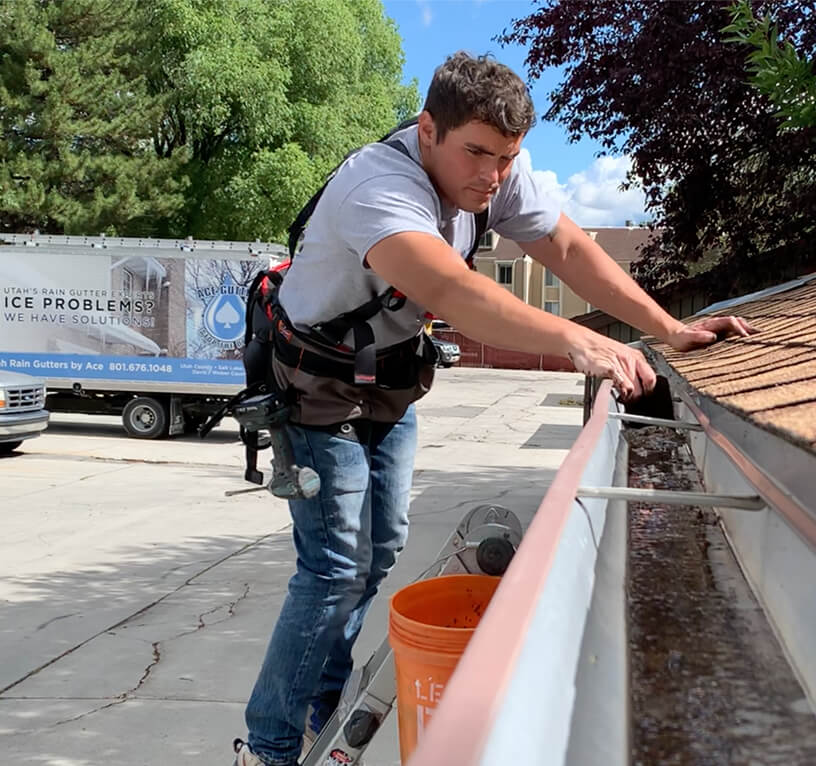
A professional gutter cleaning service does more than clear debris from the roof and gutterline. Technicians inspect joints and downspout connections for signs of wear that homeowners might not notice.
Catching a failing seal or a blocked downspout opening early keeps rainwater moving through the system. Slow drainage is one of the most common signs of debris buildup below the gutterline.
What Homeowners Gain from Staying Ahead of This
Foundation repairs rank among the most expensive projects a homeowner faces. Most of that cost traces back to water that had nowhere to go because the gutter system wasn’t maintained. Cleanings that get skipped are not the expensive part. The basement flood damage that follows it is.
Professionals bring a level of attention to gutter maintenance that a seasonal DIY cleaning doesn’t replicate. They spot failing joints, slow downspouts, and sections pulling away from the fascia before any of those issues lead to flooding or foundation water damage.
What professional gutter maintenance delivers:
- Full inspection of joints, hangers, and downspout connections with every cleaning
- Early identification of wear before it leads to overflow and foundation damage
- Downspout flow confirmation and downspout extensions are checked after every cleaning
- Gutter maintenance services are scheduled around Utah’s seasonal debris cycles
Staying ahead of clogged gutters is one of the lowest-cost ways to protect one of a homeowner’s highest-value investments.
Keeping Water Where It Belongs
A clogged gutter doesn’t look like a foundation problem from the driveway. But the connection is real, and by the time moisture shows up on a basement wall, the damage has already been working its way in for weeks. Staying ahead of it starts at the roofline.
At Ace Gutter Inc., we’ve worked with Utah homeowners long enough to know what this climate does to drainage systems. We inspect every joint and hanger during each cleaning, and we know the seasonal patterns that put Utah gutters under stress. Our experienced team keeps your system working.
If your gutters haven’t been cleaned recently or the basement is showing any signs of moisture, now is the right time to act. Contact Ace Gutter today to schedule a professional cleaning and keep water moving away from your home.

Need Help? Get a free assessment
Get a call back within 1 hour
(During business hours).
Recent Posts
Can Leaf Guards Be Installed on Older Gutter Systems?
What Type of Gutter Guard Handles Shingle Granules and Fine Debris?
How Long Do Gutter Guards Last and When Should You Replace Them?

What Are Box Gutters and Which Homes Benefit From Their Higher Capacity?

Which Gutter Style Works Best for Homes With Steep Rooflines?
Share
Recent Posts
Can Leaf Guards Be Installed on Older Gutter Systems?
August 19, 2026
TL;DR: Older gutters can often support leaf guards when they are secure, properly sloped, free of major leaks, and attached to sound fascia....
What Type of Gutter Guard Handles Shingle Granules and Fine Debris?
August 11, 2026
TL;DR: Fine-mesh gutter guards are generally the strongest choice for controlling shingle granules and other small roof debris. Proper fit, steady water intake,...
How Long Do Gutter Guards Last and When Should You Replace Them?
August 6, 2026
TL;DR: Gutter guard lifespan depends on the material, installation quality, local weather, and ongoing maintenance. Regular inspections can help identify damage, overflow, loose...