April 15, 2026
Jud Smith
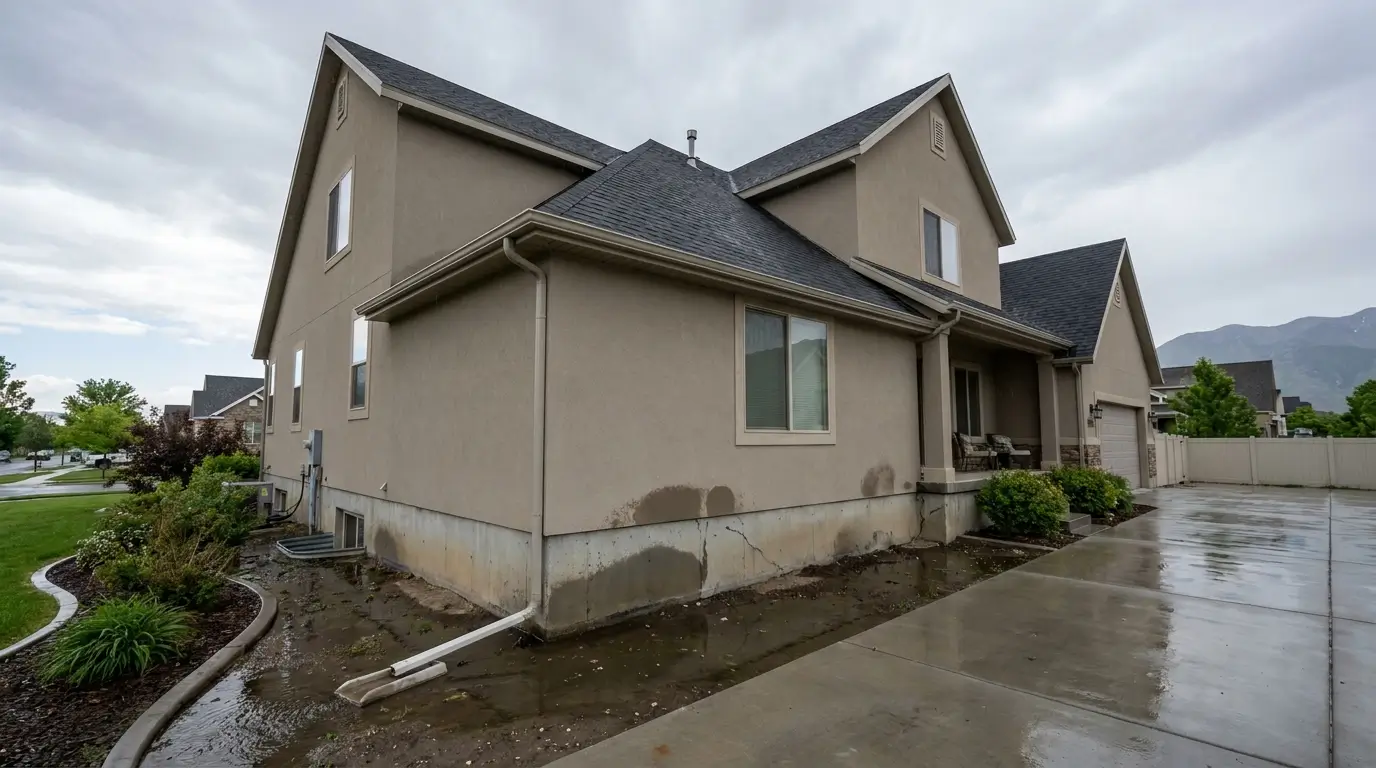
Even a small amount of water left in a pool near your home can turn into a bigger problem down the road. It may seem small and inconsequential, but it has a stacking effect as time goes on, creating pressure and long-term stress around the foundation.
If your drainage system for your house isn’t redirecting runoff effectively, it needs to be dealt with before it’s too late.
Studies of water-related foundation damage show that poor drainage is one of the leading causes of foundation problems, especially in regions with heavy rainfall, thaw cycles, and clay-rich soils.
In Utah, where many homes sit on expansive clay and experience freeze-thaw swings, the issue can be extensive. Without proper controls for water flow, your foundation can suffer cracks, uneven settling, and basement flooding that drain your budget and peace of mind.
Fortunately, most of these issues are preventable with the right foundation drainage system and regular maintenance of your gutter system and surrounding grading
What You’ll Learn:
- How a faulty or missing drainage system for your house can slowly weaken the foundation.
- The key signs that water is damaging your foundation in Utah.
- How proper gutters, grading, and subsurface drainage solutions can protect your home and avoid costly repairs.
How Does Poor Drainage Impact a Home’s Foundation?
Poor drainage means that water is either pooling near the foundation or is saturating the soil around the home, instead of flowing away. In time, the constant moisture creates a few critical issues:
- Increases hydrostatic pressure against the basement and foundation walls.
- Encourages soil to expand and contract in clay-rich regions, pushing and pulling on the foundation.
- Washes away soil and creates voids under the footing, undermining foundational support.
Each of these actions weakens the structural integrity of the foundation. What begins with a tiny crack or a small area of water accumulation grows into larger movements, bowing walls, and uneven floors if the underlying drainage problem is never corrected.
In most cases, the damage develops slowly. By the time the first visible signs appear, the system has already been under stress for years.
How Water Accumulation Around the Foundation Causes Long-Term Damage
When your yard’s natural or artificial drainage system can’t handle the runoff, water tends to pool in places where it shouldn’t.
- Water pooling near the foundation keeps the soil constantly saturated, raising the pressure against the concrete.
- Standing water post-rain that lasts more than 24 hours is a sign that the ground is not shedding the water.
- Clogged gutters or downspouts too close to the house dump large volumes of water right on top of the foundation.
As time passes, the lingering moisture will soften the soil, leading to soil erosion around the home or building’s footings, creating gaps that allow the foundation to settle unevenly. This shifting and settling causes stress on the foundation in an incalculable variety of ways, causing cracking, leaks, and mold/mildew growth that infiltrate the basement.
As the surrounding clay soil constantly expands and contracts, it pushes the walls upward or outward before letting them drop back down, creating long-term instability.
The deeper the saturation and the longer it lasts, the more likely you will eventually run into costly repairs, some of which may include cracked walls, wall straightening, or a full-depth foundation rework.
Because Utah homes rely heavily on perimeter controls and proper grading, skipping basic drainage maintenance and fixes can rapidly magnify the risk to your entire home.
Common Warning Signs of Drainage-Related Foundation Problems
There are several warning signs, and, while Utah residents may not be happy to see any of them, they should be acted on urgently before they compound into something prohibitively expensive.
Some of the biggest red flags include:
- Cracks in the foundation walls and slabs, including stair-step or horizontal fractures that grow wider over time.
- Uneven or sloping floors, where marbles roll, or doors and windows stick when they didn’t before.
- Water creeping into the basement or crawlspace post-storm.
- Standing water of puddles around the foundation, more than 24 hours post-precipitation.
- Yard grading that slopes toward the house, mulch beds and garden soil pressing against the siding, or clogged gutters and downspouts.
These significant red flags suggest that the water around your home’s foundation drainage system is not working as it should. Early detection and correction will prevent more expensive foundation repairs later, if it’s not already too late.
How Does Proper Drainage Protect Your Foundation?
Proper drainage doesn’t just keep your yard looking nice and tidy, but it also protects the structure. A well-designed and deployed drainage system for your house:
- Directs water away from the foundation, using gutters, downspouts, and grading.
- Reduces hydrostatic pressure by quickly moving water away, so it can’t soak in or pool.
- Helps manage soil moisture, slowing expansion and contraction cycles.
There are also some key components of a proper drainage system that you should be aware of:
- A properly installed gutter system regularly sheds water through clean downspouts that dump 5′ to 10′ away from the foundation.
- Grading that slopes at least 6″ over the first 10′ away from the house.
- Subsurface solutions like French drains, perforated pipes, and drainage pipes wrapped in gravel.
Altogether, these measures form a foundation drainage system that will significantly reduce the risk of foundation drainage system failures, basement flooding, and long-term structural damage.
What Is the Best Drainage System for a House?
While there is no single “best drainage system for a house,” the most effective setups are structured specifically for the needs of your particular property.
In Utah, where clay soil and seasonal freeze-thaw patterns are common, many homes benefit from a combination of the following:
- Surface drainage controls, like gutters, downspouts, and proper grading.
- Subsurface drainage, like French drains and perforated pipe systems installed around the perimeter.
- Sump pumps and catch basins in areas prone to basement flooding or high water tables.
Regular maintenance of gutters and downspouts, plus routine inspections of underground drainage pipes and perforated pipe systems, will help make sure the entire drainage system remains clear and functional.
In many cases, addressing a single weak link in the chain, like an undersized drainage system pipe or a clogged French drain, will dramatically improve how water behaves around the house.
How Often Should Utah Homeowners Maintain Their Drainage System?
For Utah homeowners, regular maintenance of the home’s drainage system is one of the easiest ways to prevent moderate to catastrophic damage down the road.
Key maintenance steps include:
- Cleaning gutters and downspouts at least twice a year or more often if you have nearby trees.
- Inspecting downspout extensions and splash blocks to make sure they are directing water correctly.
- Checking grading and flower beds to make sure the slope hasn’t shifted or the mulch is trapping moisture.
- Scheduling professional gutter cleaning in Utah when leaves, debris, and dust make it difficult to clean for yourself.
Ace Gutter Inc.’s gutter cleaning in Utah services help homeowners keep their gutters and drainage system as a whole free of leaves, sediment, and other debris, so water can freely flow. By catching clogs early and correcting minor issues, you will protect your foundation drainage system and reduce the risk of water damage in time.
Let’s Protect Your Home’s Foundation
Poor drainage or a poor drainage system leaves more than puddles in your yard. It slowly weakens your home’s foundation, creating cracks and leading to expensive repairs that probably could have been prevented with vigilance and regular maintenance.
When water continues to collect around the foundation, it will raise the hydrostatic pressure, erode the surrounding soil, and push moisture into your basement or crawl space. In Utah, these risks are magnified by clay soil, seasonal freeze-thaw cycles, and the need for reliable water control around foundations.
Ace Gutter Inc. will help Utah homeowners protect their properties with reliable gutter cleaning systems, gutter installation, and drainage solutions that repel water away from the foundations.
If you’ve noticed standing water, overflowing gutters, or early signs of water damage, contact Ace Gutter Inc. so you can discuss the drainage system issues you’re experiencing, your concerns, and help with runoff control.
The goal is to keep your property protected from costly repairs over time, and Ace Gutter Inc. is help.
FAQs
How does poor drainage impact a home’s foundation over time?
Poor drainage or a semi-functional drainage system will allow water to pool around the foundation, increasing hydrostatic pressure, causing the soil to expand and contract, and eroding support under the footing. These forces will lead to cracking, uneven settling, basement flooding, and other structural issues.
What are the warning signs of drainage system issues near a foundation?
Watch for water pooling near the house, standing water more than 24 hours post-rain, wet basements or crawl spaces, visible cracks in walls or slabs, uneven floors, and grading that slopes toward the house. These signs often point to a drainage system that isn’t directing water away properly.
What is the best drainage system for a house?
The best drainage system depends on the property, but many homes benefit from a combo of surface controls plus subsurface solutions like French drains, perforated pipe systems, and sump pumps. A drainage system specifically designed for your property will match your soil type, slope, and local rainfall patterns.
How often should Utah homeowners clean their gutters and inspect their drainage system?
Most Utah homes should have gutters and downspouts cleaned at least twice a year, more if your home is under a heavy tree canopy. It’s also wise to inspect your grading and your surface drainage system after major storms or when you notice new water pooling near the foundation.

Need Help? Get a free assessment and bid
Get a call back within 1 hour
(During business hours).
Recent Posts

Why Clogged Gutters Are a Major Cause of Basement Leaks
What Are the Most Common Causes of Water Damage in Utah Homes?
How Does Poor Drainage Affect Your Home’s Foundation Over Time?

7 Mistakes Homeowners Make When Choosing a Gutter Company

Is Pressure Washing Safe for Cleaning Gutters or Does It Cause Damage?
Share
Recent Posts
Why Clogged Gutters Are a Major Cause of Basement Leaks
April 28, 2026
The gutters haven’t been cleaned in two seasons. A heavy rainstorm rolls through, and water runs straight down the foundation wall. A few...
What Are the Most Common Causes of Water Damage in Utah Homes?
April 25, 2026
Water can be an insidious destroyer, seemingly harmless, though a single, small leak can turn into a foundation-damaging nightmare if left unaddressed. In...
How Does Poor Drainage Affect Your Home’s Foundation Over Time?
April 15, 2026
Even a small amount of water left in a pool near your home can turn into a bigger problem down the road. It...