March 25, 2026
Jud Smith
TL;DR
High-pressure washing can loosen brackets, blow out sealed joints, and drive water behind fascia. Hand cleaning, low-pressure flushing, or a pro visit protects gutters better, especially given Utah’s freeze-thaw climate.
It’s a Saturday morning, and the gutters are packed with leaves and a winter’s worth of debris. The pressure washer is already out from the driveway project. It seems like the perfect time to point it at the gutters and let her rip.
Twenty minutes later, a bracket hangs loose, two joints have blown out, and water is running behind the fascia instead of through the downspout.
That kind of shortcut carries real consequences. Water damage and freezing claims average $15,400 per incident, according to data from the Insurance Information Institute. Taking a high-pressure approach to a delicate system often results in structural repair bills that are simply not worth the risk.
For Utah homeowners, the question of whether to use a pressure washer for gutter cleaning deserves a straight answer before the machine comes out.
Here’s what you’ll learn in this guide:
- Why pressure washing gutters often creates more damage than it prevents
- Which gutter components are most at risk from high-pressure water
- Safer methods for getting gutters clean without compromising the system
- When a professional cleaning is the smarter call for Utah homes
What a Pressure Washer Actually Does to Gutters
Pressure washers are designed for hard surfaces such as concrete and brick. Gutters are thin-wall aluminum designed to channel water, not absorb a direct blast from a powerful wand. Pointing one at a gutter system without understanding the difference puts the whole roofline at risk of being soaked or dented.
The Force Behind the Problem
Residential pressure washers generate far more force than aluminum gutters are built to handle. At even a moderate setting, sealant at joints breaks down, hanger brackets flex, and the connection between the gutter and fascia board loosens.
Where the Damage Shows Up
The result isn’t always obvious right away, especially from the ground. A sealed joint separates, and water starts tracking behind the gutter instead of through it. By the time a homeowner sees the staining on the fascia or soffit, the damage has already been working its way in for weeks.
When Pressure Washing Gutters Goes Wrong
Not every pressure-washing attempt results in visible damage right away. The real problem is what happens over time when the wrong method meets the wrong system. Utah homes face that combination more often than most homeowners expect.
Older or Sectional Gutter Systems
Sectional gutters rely on joints sealed with caulk or rubber gaskets to stay watertight. Those seals weaken naturally over time, and Utah’s climate accelerates that process. A pressure washer aimed at those joints finishes what time already started.
Once a seal fails, water flows laterally rather than toward the downspout. That lateral flow works into the structure and toward the foundation. A cleaning job turned into an expensive repair bill has nothing to do with removing leaves and everything to do with force.
Improper Angle and Distance
Most homeowners aim at gutters the same way they’d aim at a dirty driveway, straight on and close. With concrete, that spray works well. With gutters, a wide angle drives water into seams, up behind hangers, and into spaces that should stay dry inside the roof structure.
Distance matters just as much as the angle of the wand. Too close and the pressure concentrates long enough to deform thin aluminum or blast away paint. Sweeping slowly at the wrong trajectory pushes debris toward downspout openings instead of clearing the path.
The Roof Line Risk
Gutters sit at the base of the roofline, putting a pressure washer in direct range of shingles and flashing when the angle drifts upward. Water driven under shingles at high pressure breaks the seal between them. Flashing around chimneys and valleys is especially exposed to the spray.
This is damage that shows up months later, long after the cleaning project is forgotten. A roof leak traced to a pressure-washing session isn’t uncommon. The repair cost dwarfs whatever the cleaning was supposed to accomplish.
How to Pressure Wash Gutters Without Causing Damage
Done wrong, pressure washing trades a debris problem for a structural one. Done right, it moves through a gutter system cleanly without stressing joints, hangers, or the roofline above. Equipment and a little prep work before the machine starts make all the difference for a safe rinse.
Choosing the Right PSI and Nozzle
Most homeowners grab whatever pressure washer is in the garage, but gas-powered units often run well above what gutters are able to handle. According to Angi, the recommended range for DIY gutter cleaning is 1,500 to 1,800 PSI. This is the right pressure to remove dirt without stressing seams.
The nozzle choice matters just as much as the total pressure applied. A 40-degree white nozzle spreads the spray wide enough to clean without concentrating the blast at a single point. Narrow nozzles strip sealant and drive water into spots that should stay dry.
Proper Angle, Distance, and Direction
Pointing the trigger straight down into the gutter channel pushes debris toward the downspout opening and forces water up behind hanger brackets. Work from one end toward the downspout, with the nozzle angled slightly downward. Hold it at least 12 inches from the surface.
Staying too close concentrates the stream long enough to deform thin aluminum or separate a joint already under stress. A consistent working distance gives the spray room to spread before it contacts the metal. This makes the job easy to manage without causing the metal to flex or turn.
What to Check Before and After
Before the machine comes out, walk the roofline and look for loose brackets, failing joints, sections pulling away from the fascia, or hangers that have started to flex. Those need attention before any water hits them. Pressure washing over existing damage only accelerates it.
After you rinse the system, run a garden hose through the downspouts and watch how water moves. Slow drainage or pooling points to clogs that got pushed further in during the process. Catching it right away beats tracing a water stain across the soffit weeks later.
The Safest Ways to Clean Gutters
Pressure washing gets the most attention, but it’s one of several methods homeowners use to keep gutters clear. Each approach carries different risks and works better in certain situations. Knowing which method fits the system, the season, and the debris type saves time.
Hand Cleaning and Low-Pressure Flushing
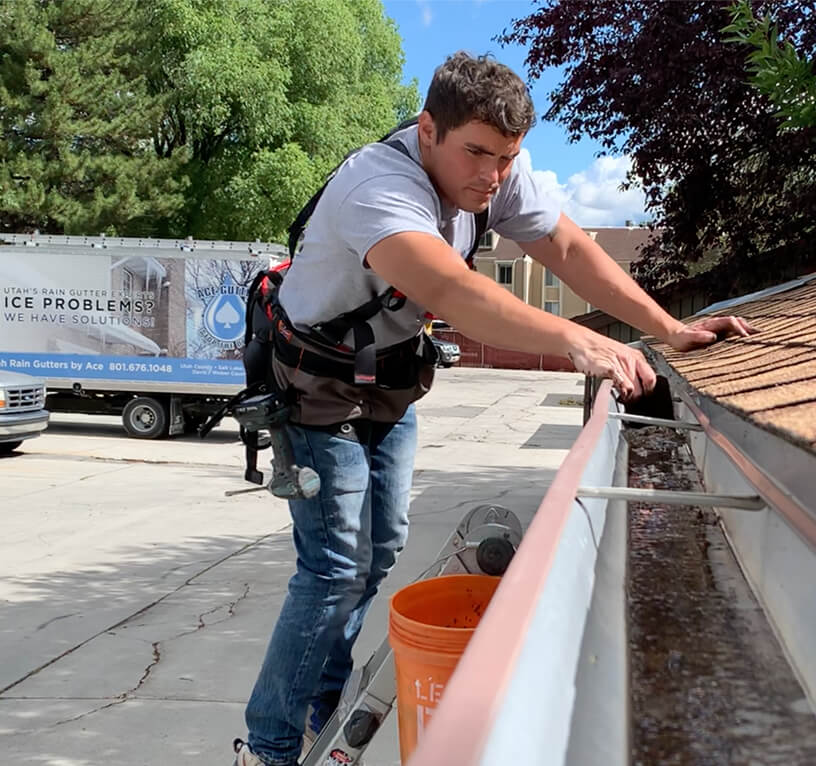
Hand cleaning remains the most controlled option for most gutter systems. A scoop, a bucket, and a pair of gloves pull leaves out without putting any stress on joints, brackets, or sealant. Older sectional gutters and systems with visible wear hold up better to this hand method than to any pressurized tool.
A garden hose flush after hand cleaning confirms the downspouts are cleared. Water pressure from a standard hose sits well below the threshold that stresses gutter components. For Utah homeowners dealing with the cottonwood season, this combination handles most situations.
Gutter Cleaning Attachments and Tools
A telescoping wand or curved gutter attachment connects directly to a pressure washer or garden hose, letting homeowners clean from the ground without a ladder. The attachment keeps the nozzle at a controlled angle, directing water toward the downspout rather than into seams.
A wet/dry vacuum with specialized attachments works well for dry debris like pine needles. These tools pull material out without introducing any water pressure to the system. Both tool types extend the range of what a homeowner is able to handle safely while staying on the ground.
Comparing Gutter Cleaning Methods
Different systems, conditions, and debris types call for different approaches. This table breaks down how the most common methods stack up.
| Method | Best For | Risk Level | Works for Utah Conditions |
| Hand Cleaning | All gutter types, especially older systems | Low | Yes |
| Garden Hose Flush | Light debris, post-storm rinse | Low | Yes |
| Pressure Washer | Seamless gutters in good condition | Medium to High | With caution |
| Gutter Attachment Tools | DIY cleaning without ladder use | Low | Yes |
| Professional Cleaning | Heavy buildup, aging systems, full inspection | Low | Best option |
Utah’s freeze-thaw cycles and dry seasons put more wear on gutter systems than most homeowners account for. A method that works fine in a milder climate will accelerate existing damage. When the system shows any signs of wear, the lower-risk options in the table above are the smarter starting point.
What Utah Conditions Add to the Equation
Utah’s climate puts gutter systems through more stress than most homeowners account for. Wide temperature swings and dusty periods between storms create a maintenance cycle that differs from that in milder regions. Cleaning frequency and method should both reflect those factors to keep the system clear.
Freeze-Thaw Cycles and Sealant Wear
Sectional gutters rely on sealed joints to stay watertight, and Utah’s winters work against those seals steadily. Temperatures drop overnight and climb by afternoon. That repeated contraction and expansion breaks down caulk and gaskets.
Pressure washing over a compromised seal finishes the job winter started.
Cottonwood, Dust, and Seasonal Buildup
Spring cottonwood season is a legitimate maintenance event for Utah homeowners. The fluff packs into channels and downspout openings quickly. Once wet, it compresses into a dense mat that a standard flush struggles to move. Getting ahead of it before the heaviest drop keeps the system draining.
Summer dust and fall debris add their own cycles. Utah’s dry conditions mean fine particles settle into gutters between rain events and build up steadily. A quick inspection after windstorms catches accumulation before it becomes a drainage problem.
Best Times of Year to Clean Utah Gutters
Two cleanings a year cover most Utah homes. Late spring, after cottonwood season winds down, and late fall after leaves have dropped, are the two windows that matter most. Homes near cottonwood trees or with heavy coverage may need an additional pass in early spring to keep the gutters clear.
What Homeowners Gain from Getting This Right
A gutter system that drains correctly protects the foundation, the fascia, and everything behind the walls. Getting the cleaning method wrong puts all of that at risk, and the repair costs that follow rarely stay small.
Professionals bring more than equipment to the job. They spot failing joints, stressed hangers, and sections pulling away from the fascia before those issues turn into water intrusion. A routine cleaning becomes a full assessment of where the system actually stands.
What professional gutter cleaning delivers:
- A full inspection of joints, hangers, and fascia connections alongside the cleaning
- Proper method selection based on gutter age, material, and current condition
- Downspout clearing and flow confirmation after every cleaning
- Early identification of damage before it reaches the interior of the home
Bringing the Exterior Together from the Top Down
Gutter cleaning looks simple from the driveway. Point something at it, clear the debris, and move on. But the method matters, and the wrong approach leaves damage that doesn’t show up until water is already working through the structure.
At Ace Gutter Inc., we’ve worked with Utah homeowners long enough to know how the climate affects these systems. Our experienced team inspects every joint, hanger, and downspout connection during every cleaning. Every cleaning accounts for how Utah’s climate affects these systems.
If the gutters are due for a cleaning or haven’t been inspected in a while, now is the right time to reach out. We take pride in providing the thorough care your home deserves. Contact Ace Gutter Inc. today, and let’s make sure the system is ready for whatever the next season brings.
FAQs
Is it safe to pressure wash gutters?
Standard pressure washers generate far more force than thin aluminum gutters are built for. Sealant, hangers, and joints often loosen or fail, so a gentle hand-cleaning approach is usually the safer route.
What PSI should I use if I pressure wash gutters myself?
Most guidance points to 1,500–1,800 PSI paired with a 40-degree wide-spray nozzle. This removes debris without concentrating force on seams or joints.
How do I know if pressure washing damaged my gutters?
Run a garden hose through the downspouts afterward and watch for slow drainage or pooling. Staining on the fascia or soffit weeks later is another sign that water is tracking behind the gutter.
What’s the safest way to clean gutters without a pressure washer?
Hand cleaning with a scoop and gloves, followed by a garden hose flush, puts the least stress on joints and brackets. Telescoping attachments or a wet/dry vacuum also work well for ground-level cleaning.
How often should Utah homeowners clean their gutters?
Two cleanings a year cover most homes: late spring after cottonwood season and late fall after leaves drop. Homes near heavy cottonwood coverage may need an extra pass in early spring.

Need Help? Get a free assessment
Get a call back within 1 hour
(During business hours).
Recent Posts
Can Leaf Guards Be Installed on Older Gutter Systems?
What Type of Gutter Guard Handles Shingle Granules and Fine Debris?
How Long Do Gutter Guards Last and When Should You Replace Them?

What Are Box Gutters and Which Homes Benefit From Their Higher Capacity?

Which Gutter Style Works Best for Homes With Steep Rooflines?
Share
Recent Posts
Can Leaf Guards Be Installed on Older Gutter Systems?
August 19, 2026
TL;DR: Older gutters can often support leaf guards when they are secure, properly sloped, free of major leaks, and attached to sound fascia....
What Type of Gutter Guard Handles Shingle Granules and Fine Debris?
August 11, 2026
TL;DR: Fine-mesh gutter guards are generally the strongest choice for controlling shingle granules and other small roof debris. Proper fit, steady water intake,...
How Long Do Gutter Guards Last and When Should You Replace Them?
August 6, 2026
TL;DR: Gutter guard lifespan depends on the material, installation quality, local weather, and ongoing maintenance. Regular inspections can help identify damage, overflow, loose...