December 14, 2025
Jud Smith
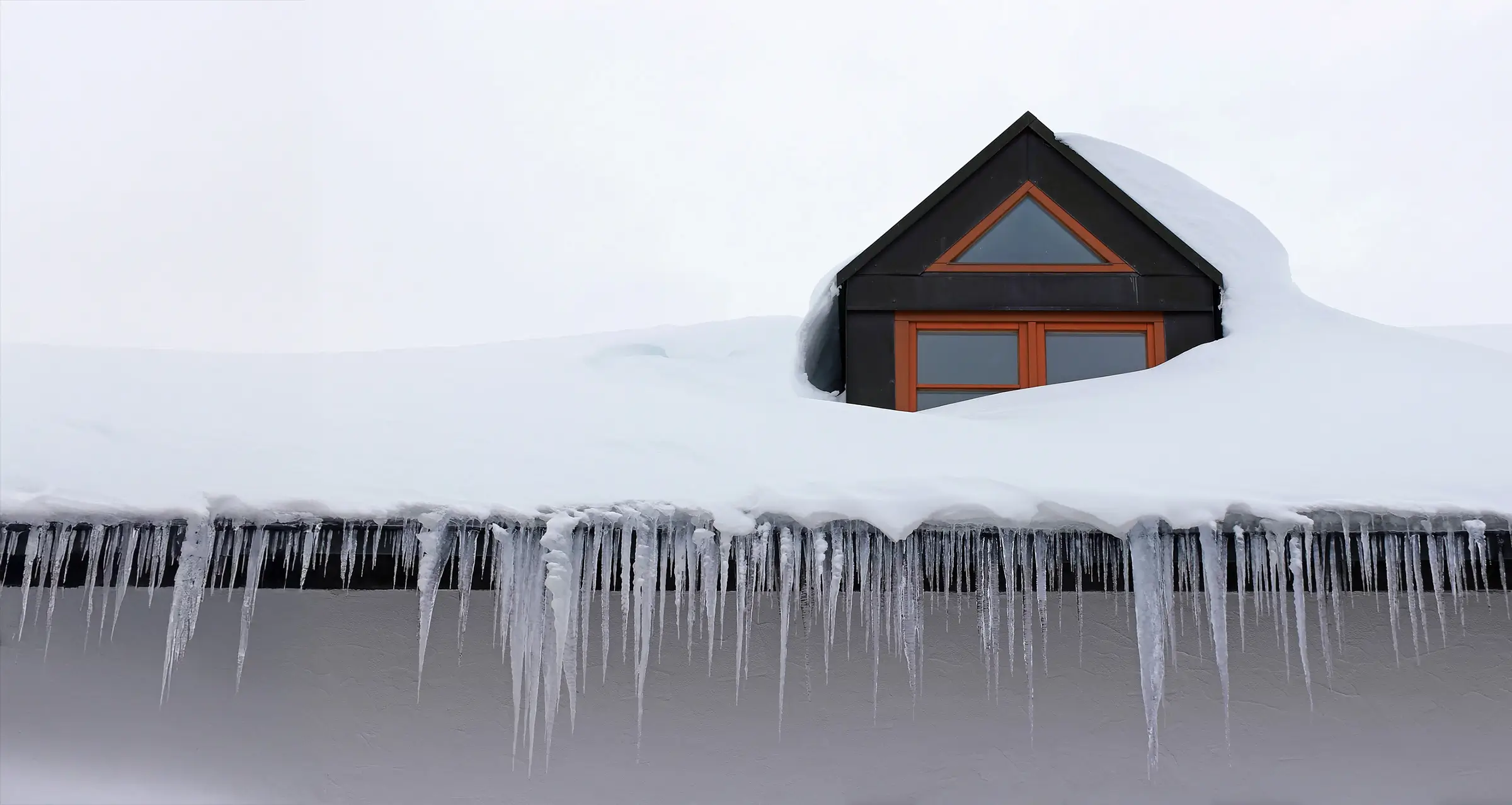
That thick ridge of ice hanging off your gutters isn’t just a winter eyesore. In reality, it’s often the first sign of a much bigger roofing issue.
Ice dams form in northern climates when melting roof snow flows down to the colder edge of the roof and refreezes. Over time, that refreezing creates ice buildup along the roof edge and inside the gutter system.
A gutter ice dam (sometimes called an ice dam in gutter or ice dam on gutter) blocks normal drainage, forcing water to back up under roof shingles instead of flowing away from your house.
That backed-up water can soak decking, seep into the attic space, stain ceilings, and even start damaging walls. Left unchecked, ice dam damage can contribute to mold, wood rot, and (in severe cases) roof failure.
So, how can you avoid this problem? Let’s talk about it.
The Real Culprit: Heat Loss from Inside the House
Ice dams don’t start on the roof. They start inside.
When warm air inside your home escapes into the attic, it heats the roof surface just enough to start melting snow. That water runs downhill until it reaches colder roof edges and gutters, where it refreezes. This cycle repeats, and before long, ice dams form.
Common causes include:
- Poor attic insulation
- Gaps or air leaks around light fixtures and attic hatches
- Inadequate roof vents
- Uneven temperatures across the roof surface
All of this adds up to excessive heat loss, which is the fuel that lets ice dams keep growing. In some cases, ice dams can become so extensive that they cost $4,000 to repair (on the high end).
Step 1: Seal and Insulate the Attic First
If you want to prevent ice dams, start by controlling the temperature in the attic space.
- Seal obvious air leaks so warm air doesn’t escape upward.
- Upgrade attic insulation to maintain consistent temperatures.
- Make sure insulation isn’t blocking airflow at the eaves.
A colder, evenly cooled roof surface prevents melting snow in the first place, cutting off the problem at its source.
Step 2: Improve Roof Ventilation
Proper roof ventilation keeps outside air circulating through the attic so heat doesn’t linger where it shouldn’t. When intake and exhaust roof vents are balanced, they help regulate attic temperatures and prevent warm air from settling against the roof surface.
This steady airflow also reduces moisture buildup and limits heat loss, both of which play a role in winter roof problems.
Most importantly, even ventilation keeps snow from melting unevenly across the roof, which is one of the main conditions that allows ice dams to develop. It may not be visible from the ground, but good ventilation does a lot of behind-the-scenes work to support long-term ice dam prevention.
Step 3: Manage Snow Before It Turns Into Ice
When heavy storms leave excess snow on your roof, early removal can make a meaningful difference. Using roof rakes or a snow rake from the ground allows you to safely clear the roof edge without climbing or putting stress on the shingles.
The goal is to focus on the first few feet above the gutters, where melting snow is most likely to refreeze. Be careful to only remove loose snow. Never chip, hammer, or pry at existing ice.
By reducing the amount of snow sitting at the roof edge, you limit how much water can melt, refreeze, and eventually contribute to gutter ice dams.
Step 4: Be Careful with Temporary Fixes
Homeowners often reach for quick solutions, but some can cause more harm than good. For example:
- Rock salt can damage roof shingles and metal gutters.
- Improper gutter ice dam removal methods may crack gutters or loosen fasteners.
Ice Melt Systems: A Thoughtful Temporary Tool
Another option many homeowners consider is an ice melt system. These use electric or heated cables installed along roof edges and in gutters to encourage continuous drainage. As such, ice melt systems can interrupt ice buildup when installed properly and sized correctly for your roof.
However, they work best as part of a broader strategy that addresses the causes of ice dam formation, like attic insulation and ventilation. If you go this route, be sure to review the details in Ace Gutter’s guide on ice melt systems so you understand how they function and what maintenance they require.
Temporary fixes should always support (not replace) proper insulation and ventilation. It’s always best to contact professionals to assess the extent of your ice problem and recommend the most appropriate solutions.
Why Gutters Matter More Than You Think
Clogged or poorly pitched gutters make it easier for water to refreeze. Once water can’t drain, gutter ice dams grow faster and heavier, increasing strain on fascia boards and roof edges. In winter, that extra weight plus expanding ice raises the risk of long-term roof failure.
Solutions like gutter guards for ice dams can help keep meltwater moving, but they work best as part of a full system, not a standalone fix.
Why Ice Dams Are Especially Common in Utah Homes
Homeowners across Utah face a mix of conditions that make ice dams more likely than in many other regions.
Utah’s winter weather often swings between cold nights and sunny daytime temperatures, which accelerates melting and refreezing along the roof edge. Add in heavier snow loads along the Wasatch Front and mountain communities, and the risk increases even more.
Many Utah homes also have steep rooflines and wide eaves. These are great for shedding snow, but also prime spots where ice dams form if attic temperatures aren’t well controlled.
Because Utah winters can last for months, small insulation gaps or ventilation issues don’t just cause short-term problems; they compound over time. Addressing attic insulation, airflow, and gutter performance early in the season is especially important here to avoid repeated ice buildup and the long-term damage that follows.
When You Want Expert Help (and Fewer Winter Worries)
If ice keeps building up along your gutters year after year, it may be time for a professional assessment.
At Ace Gutter, we help Utah homeowners evaluate gutter performance, drainage flow, and winter readiness. This means looking at how snowmelt moves before it turns into a problem.
From correcting pitch issues to advising on upgrades that reduce ice dam risk, their team focuses on practical fixes that protect your roof, siding, and interior spaces through the toughest months of winter.Schedule an assessment today to get started.

Need Help? Get a free assessment and bid
Get a call back within 1 hour
(During business hours).
Recent Posts

Share
Recent Posts

Why Choosing a Local Gutter Company Benefits Your Home
January 28, 2026
Utah homeowners rely on their gutter systems to handle everything from spring rainstorms to heavy winter snowmelt. When gutters are installed and maintained...

What Happens If You Ignore Gutter Maintenance
January 21, 2026
Gutters don’t ask for much. They subtly move water away from your roof, siding, and foundation… until they don’t. When that happens, problems...

What Is a Gutter Apron and Should You Have One Installed?
January 17, 2026
Most homeowners assume their gutters are doing all the work at the roofline, but water has a way of finding the one spot...